

AZUR NATURAL BODY CARE Rituals · Groningen, Netherlands
A day in the mould, then weeks
Azur is a soap works from Groningen. Its bars take their colour from clay and dried plants, their scent from essential oils alone. Eline, who started it, trained as a molecular biologist.
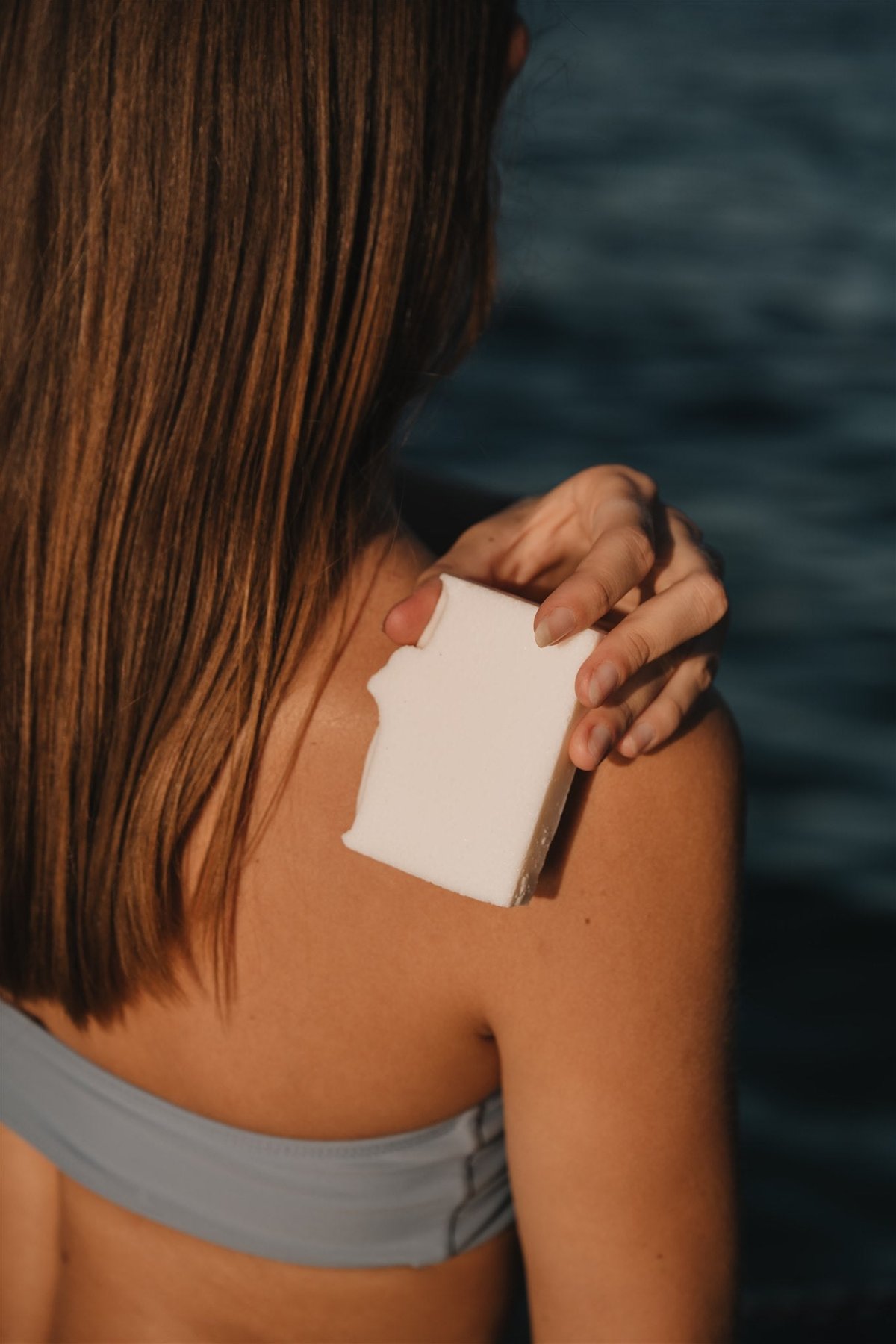
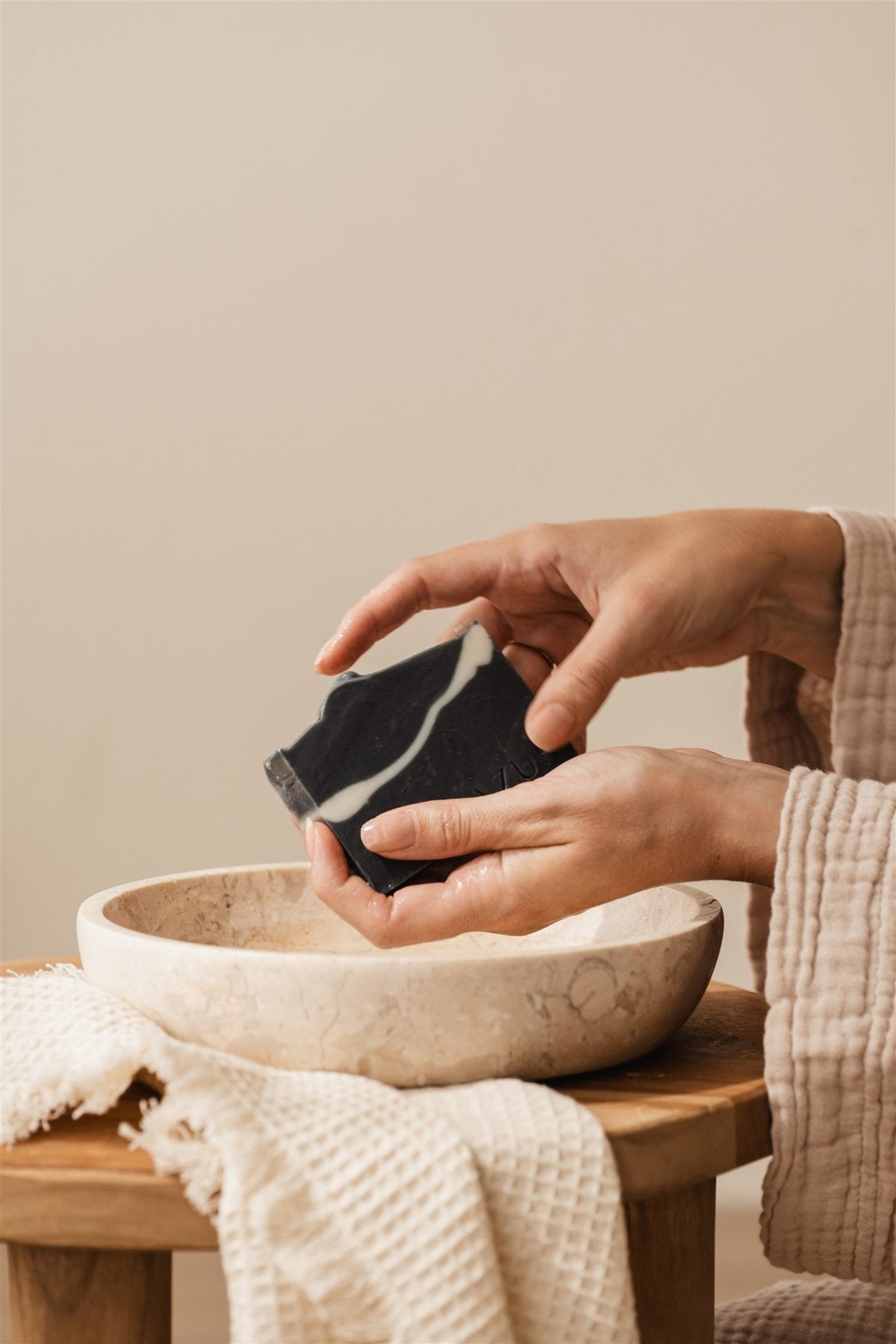
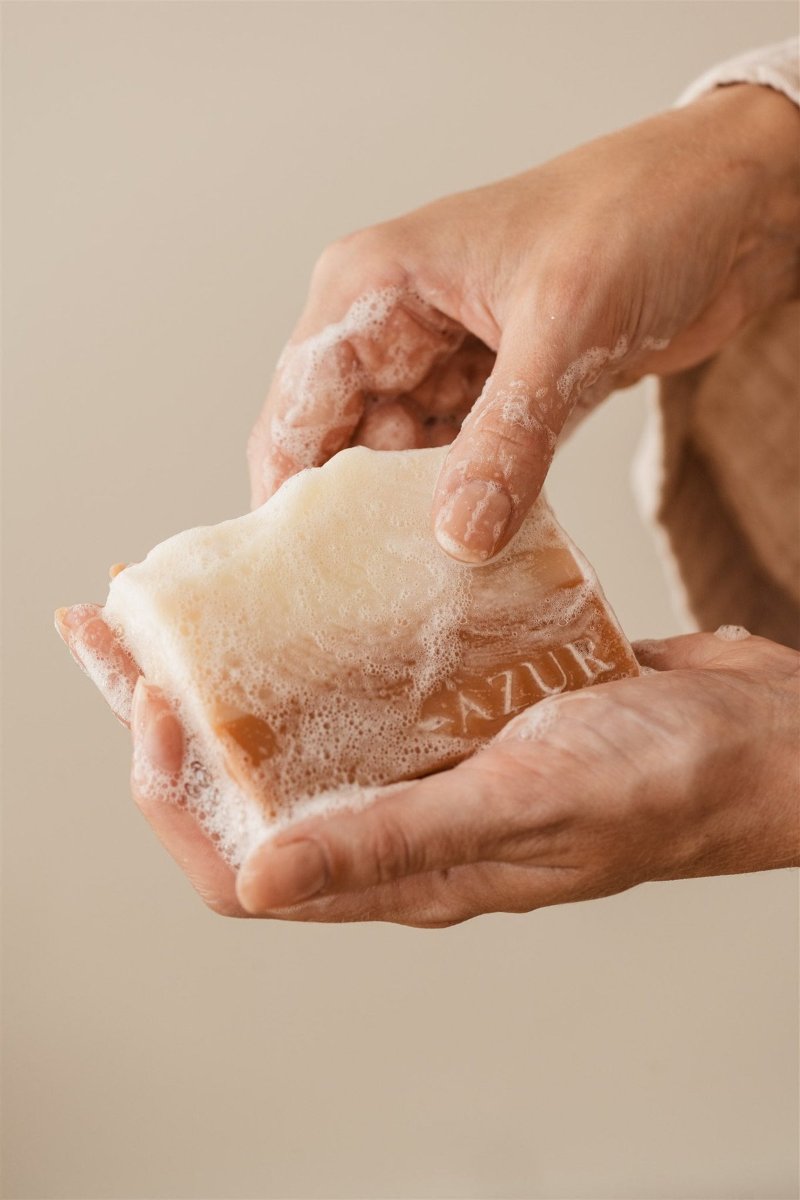
Eline's case for a bar begins with what sits inside a bottle. Liquid soap is mostly water, by her account, and the surfactants that make it foam are degreasing agents of the sort used in household cleaner, with alcohol-based fragrance and added preservatives on top. A bar leaves the water out. It arrives as the concentrate, and the person washing adds the rest at the tap. A share of the nourishing oil is left unsaponified on purpose, and that is the reason the brand gives for a bar washing clean without the tight feeling that sends people reaching for lotion afterwards. A box with less water in it also travels lighter and leaves less to throw away.
Batter, then blocks
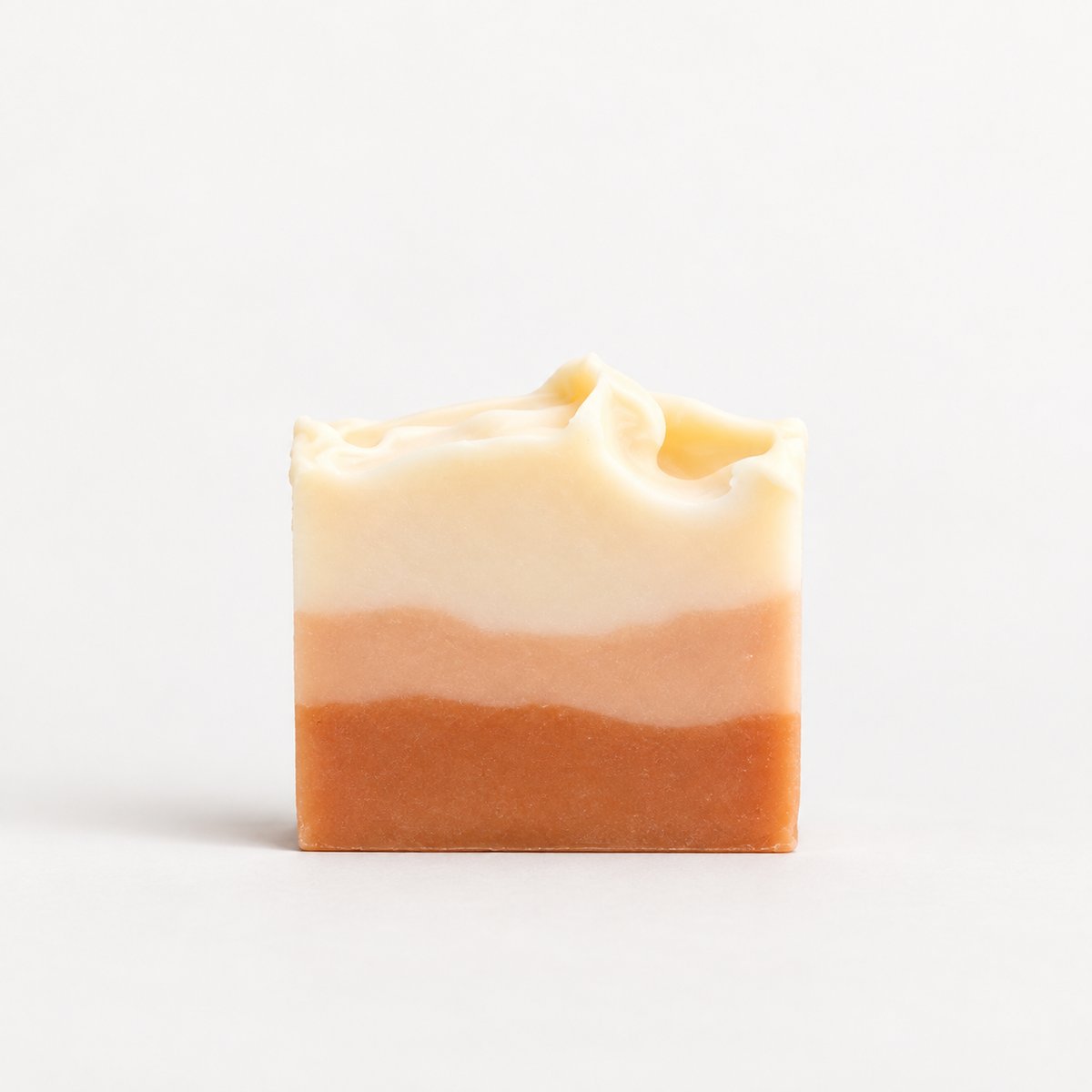
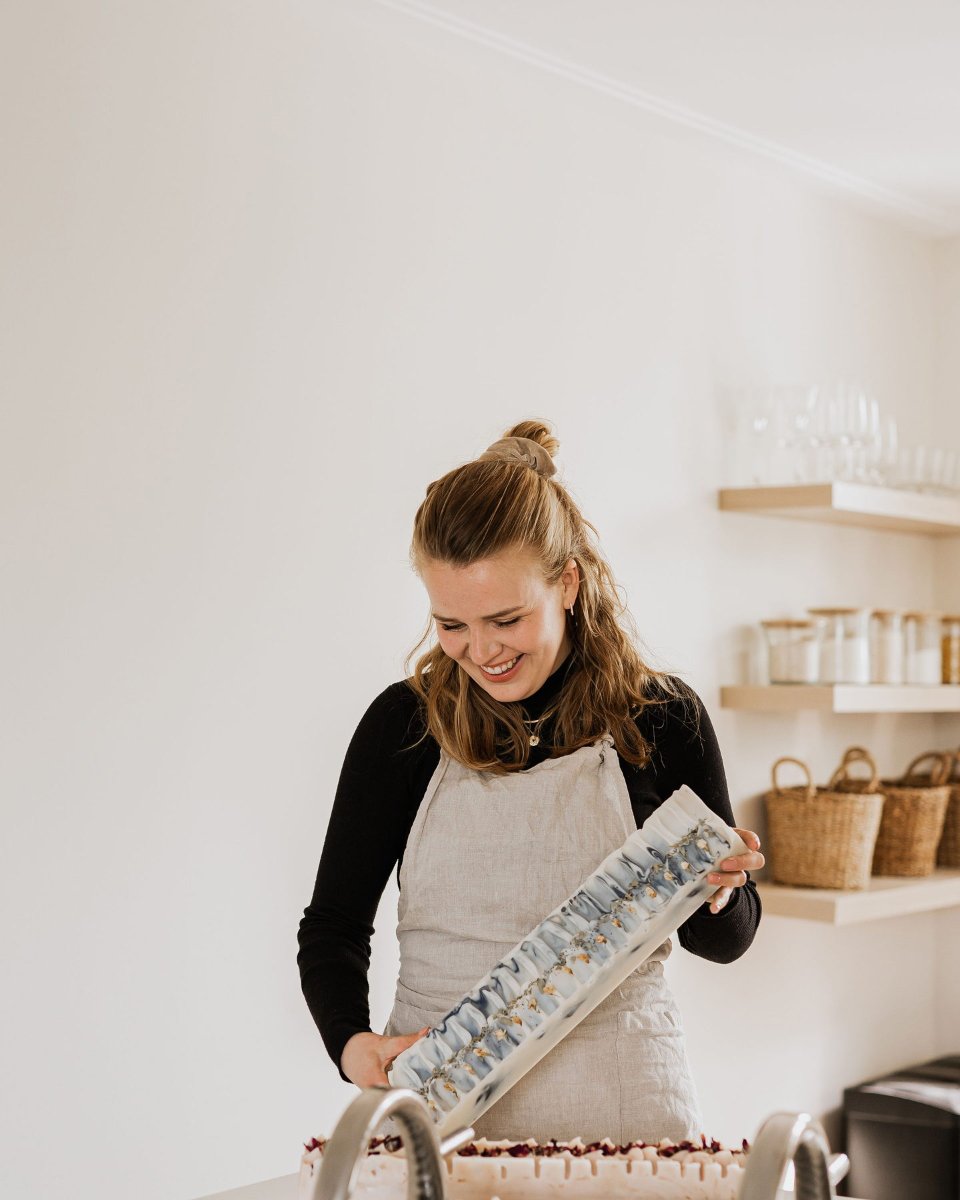
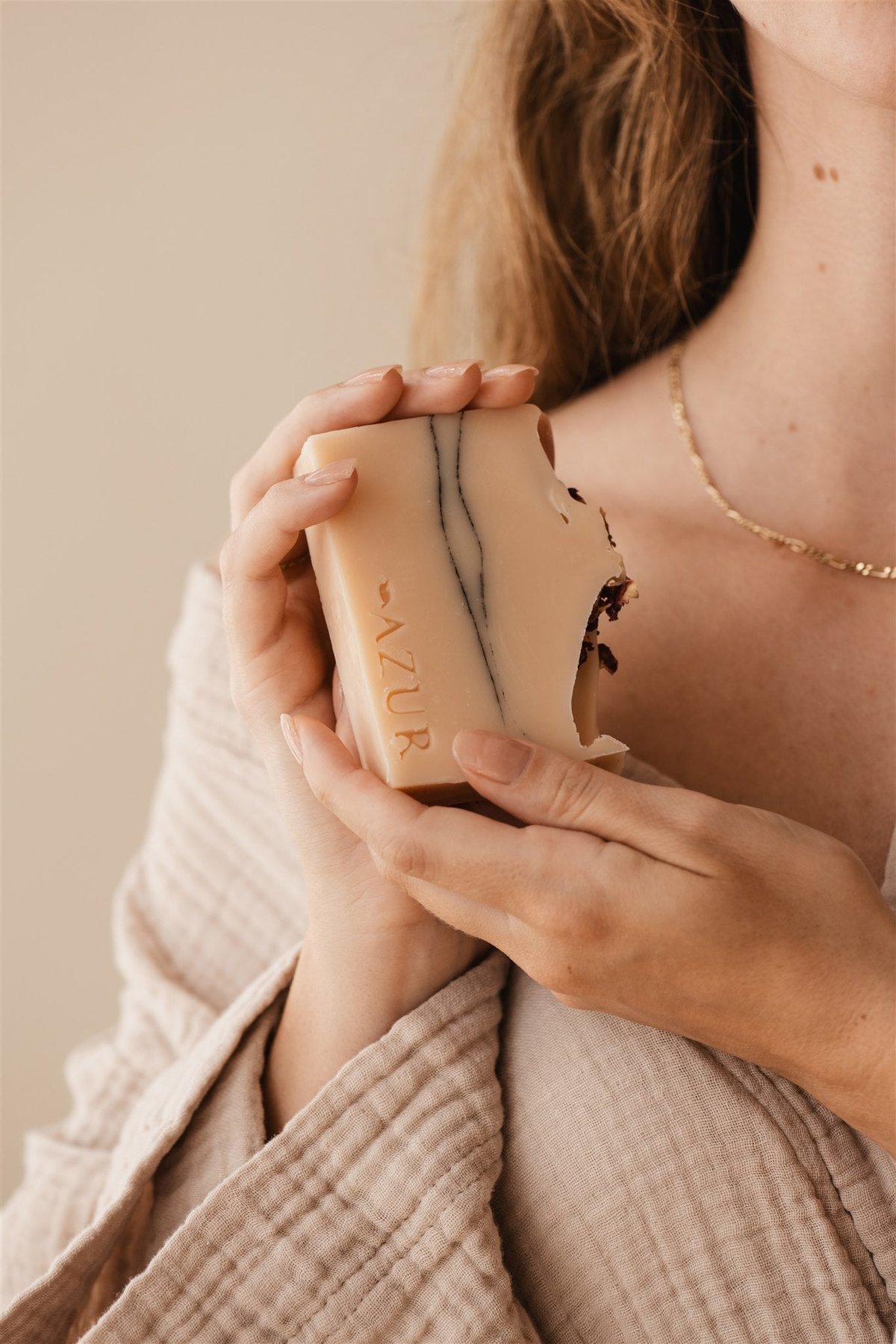
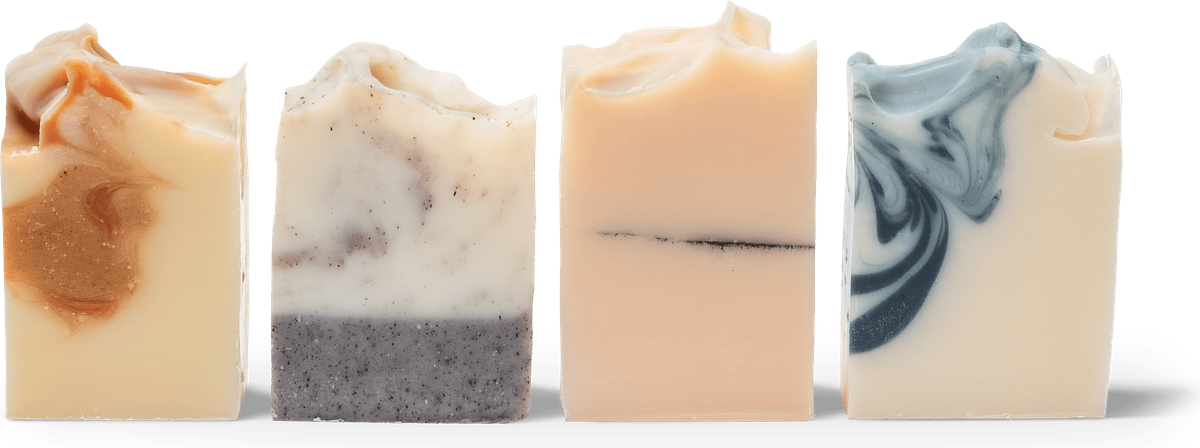
A batch starts as batter. Olive, coconut and sweet almond oil meet an alkaline base and turn into soap, with cocoa butter, shea butter and castor oil in the mix. Rose clay, red clay, kaolin, green clay, indigo leaf, activated charcoal and ground coffee are worked into the batter itself, and which of them goes in depends on the bar being made. The batter is poured into moulds and left to set for twenty-four hours, then cut into blocks and stacked to air dry for four to six weeks before a single bar can be sold. All of that happens in the brand's own atelier in the Netherlands, where the weighing, the pouring, the cutting and the packing are hand work done on site.
The bar as an object
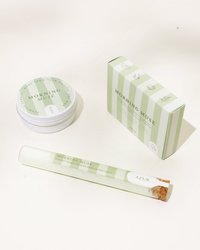
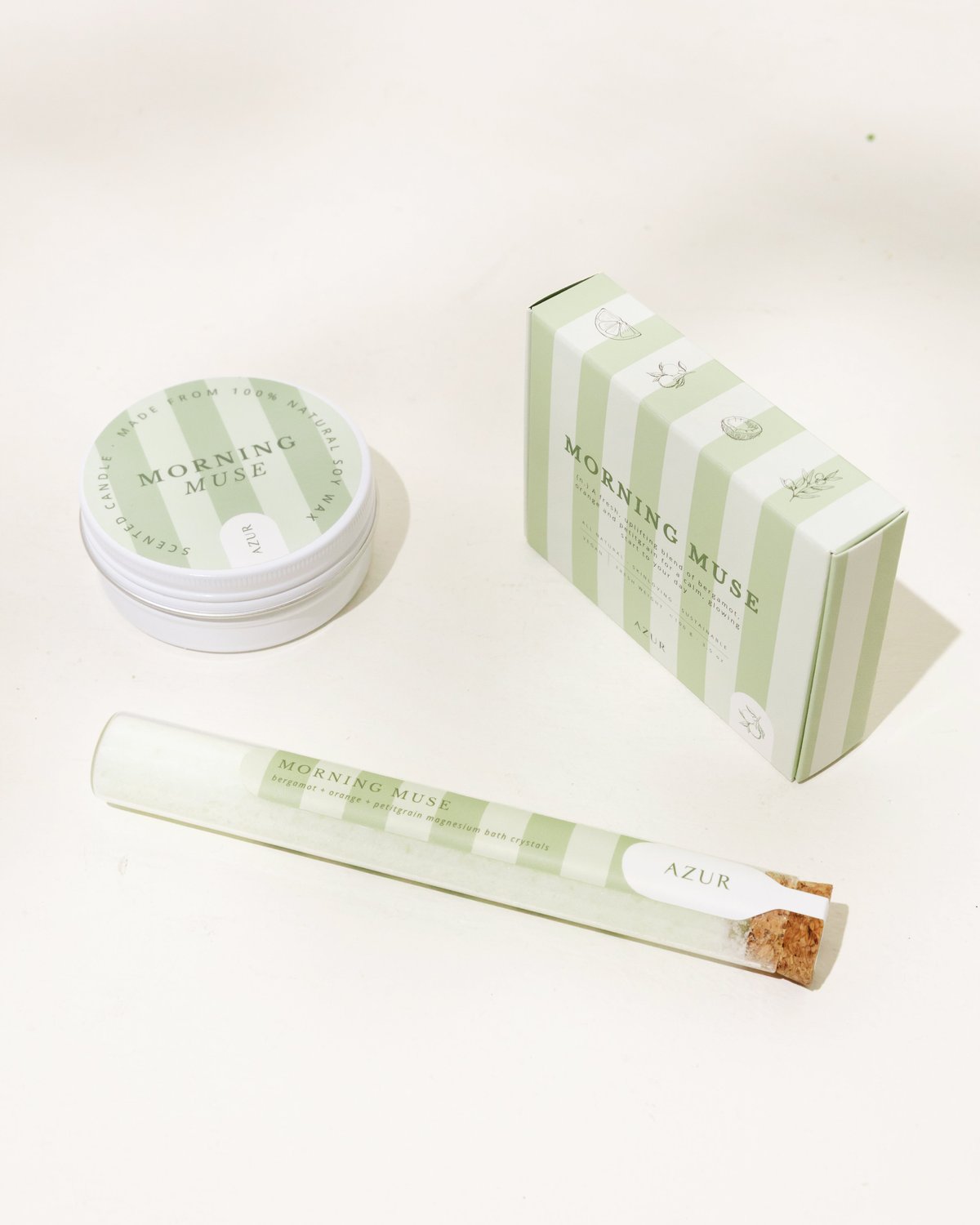
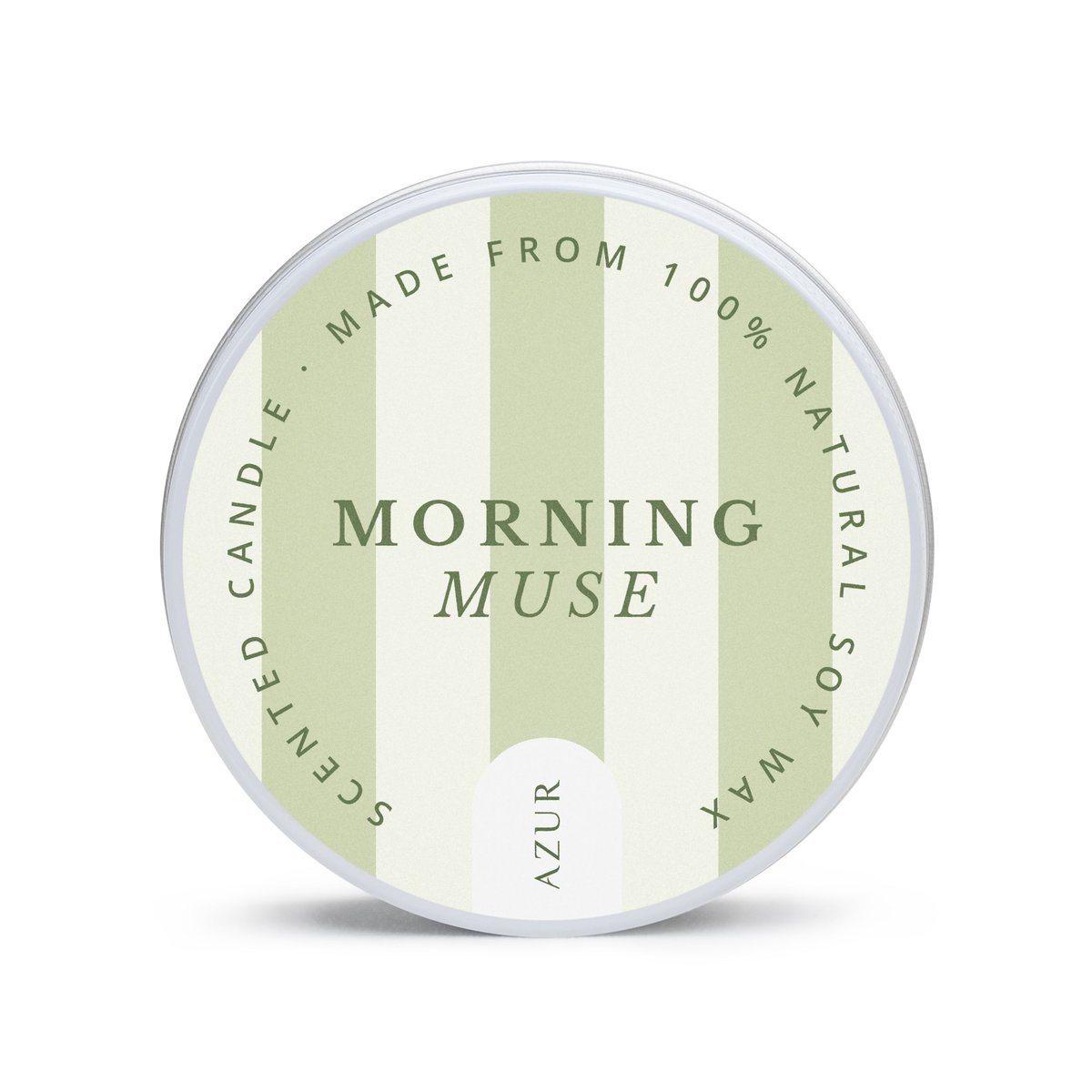
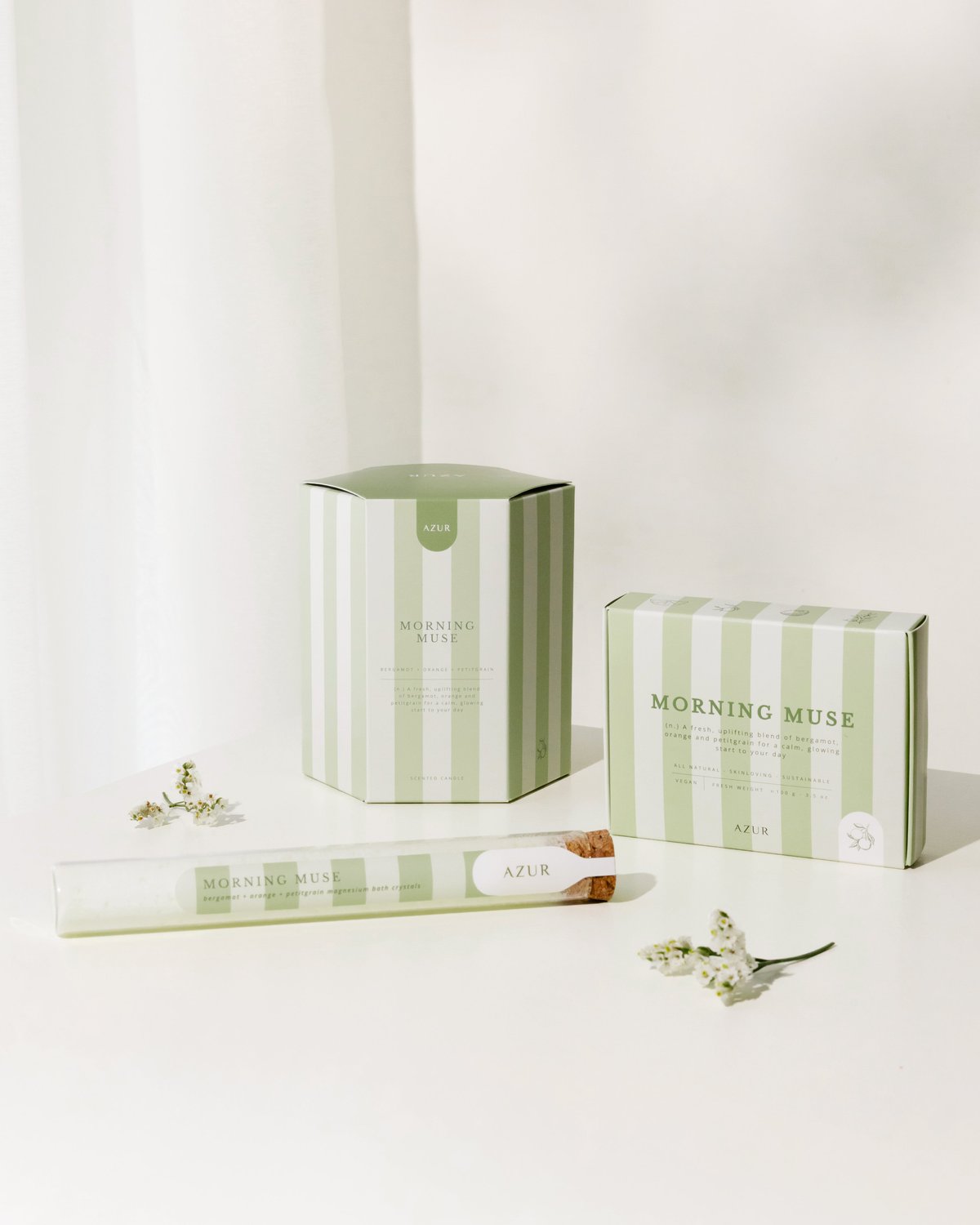
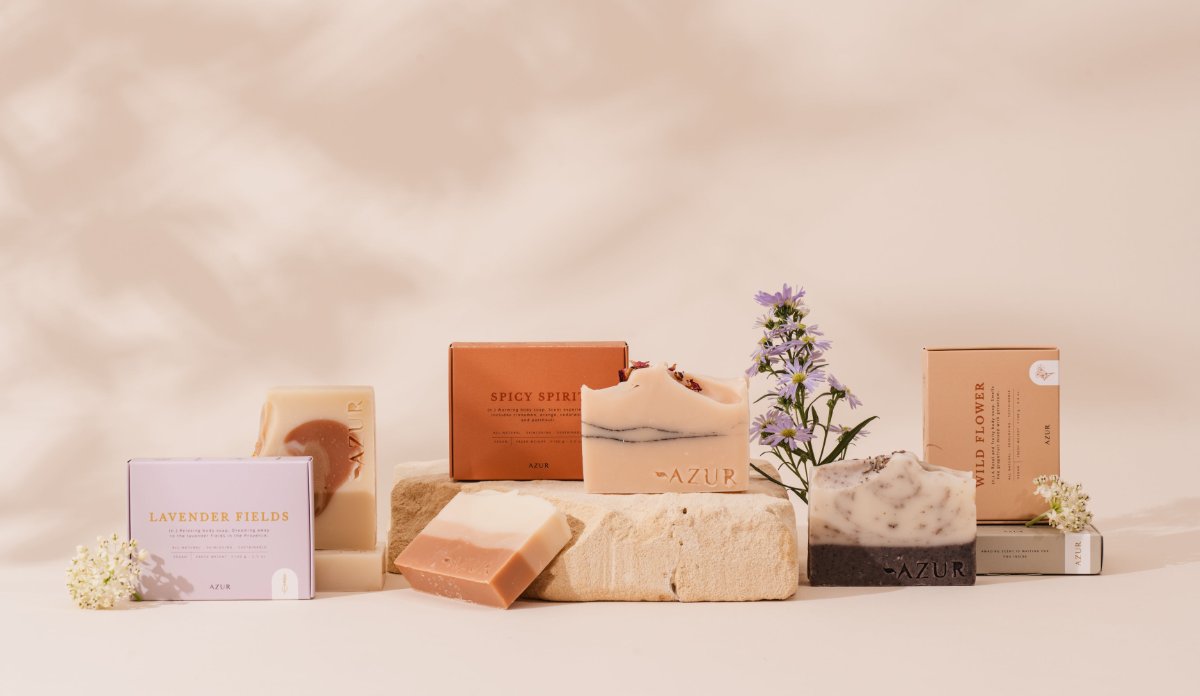
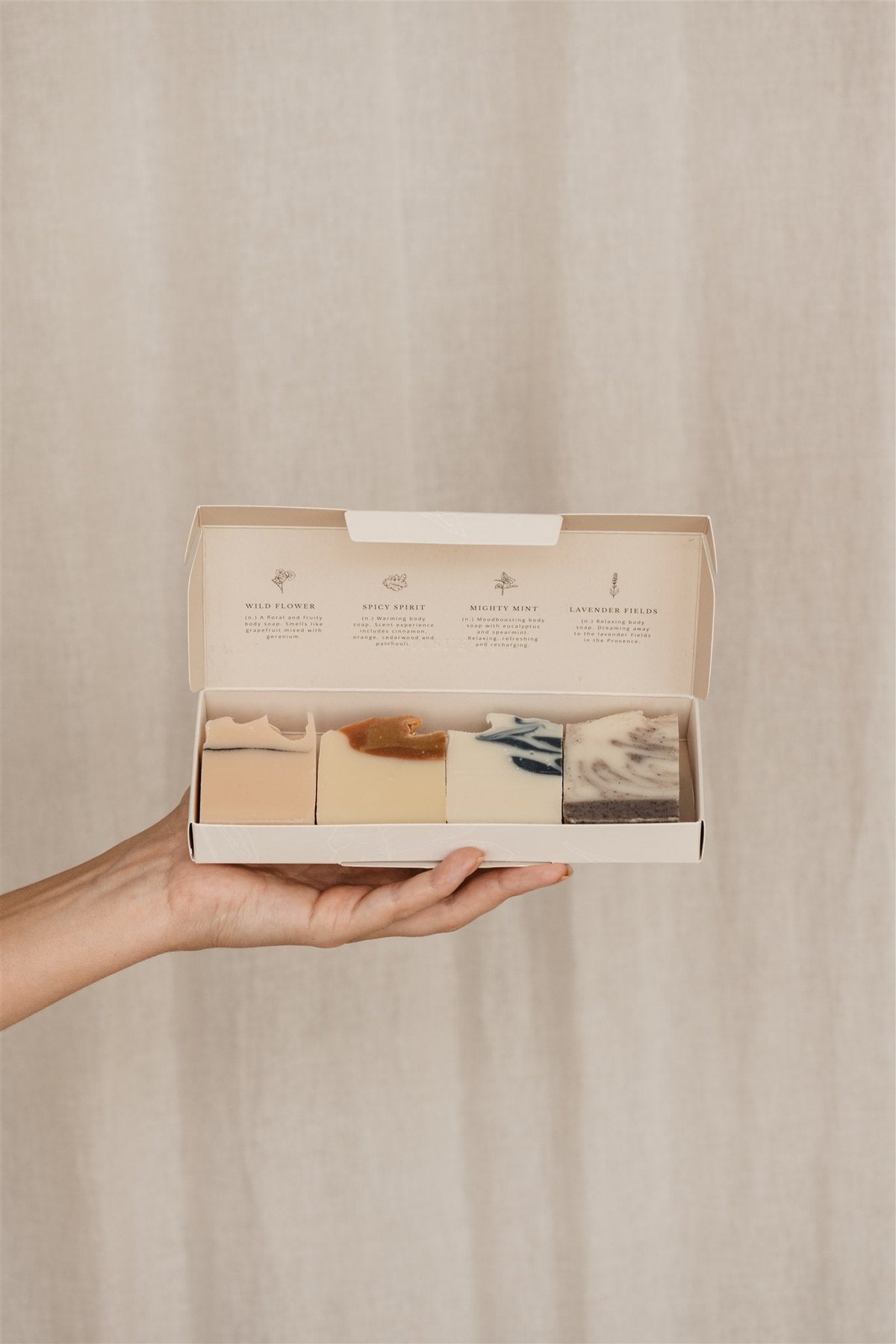
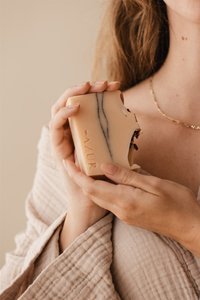
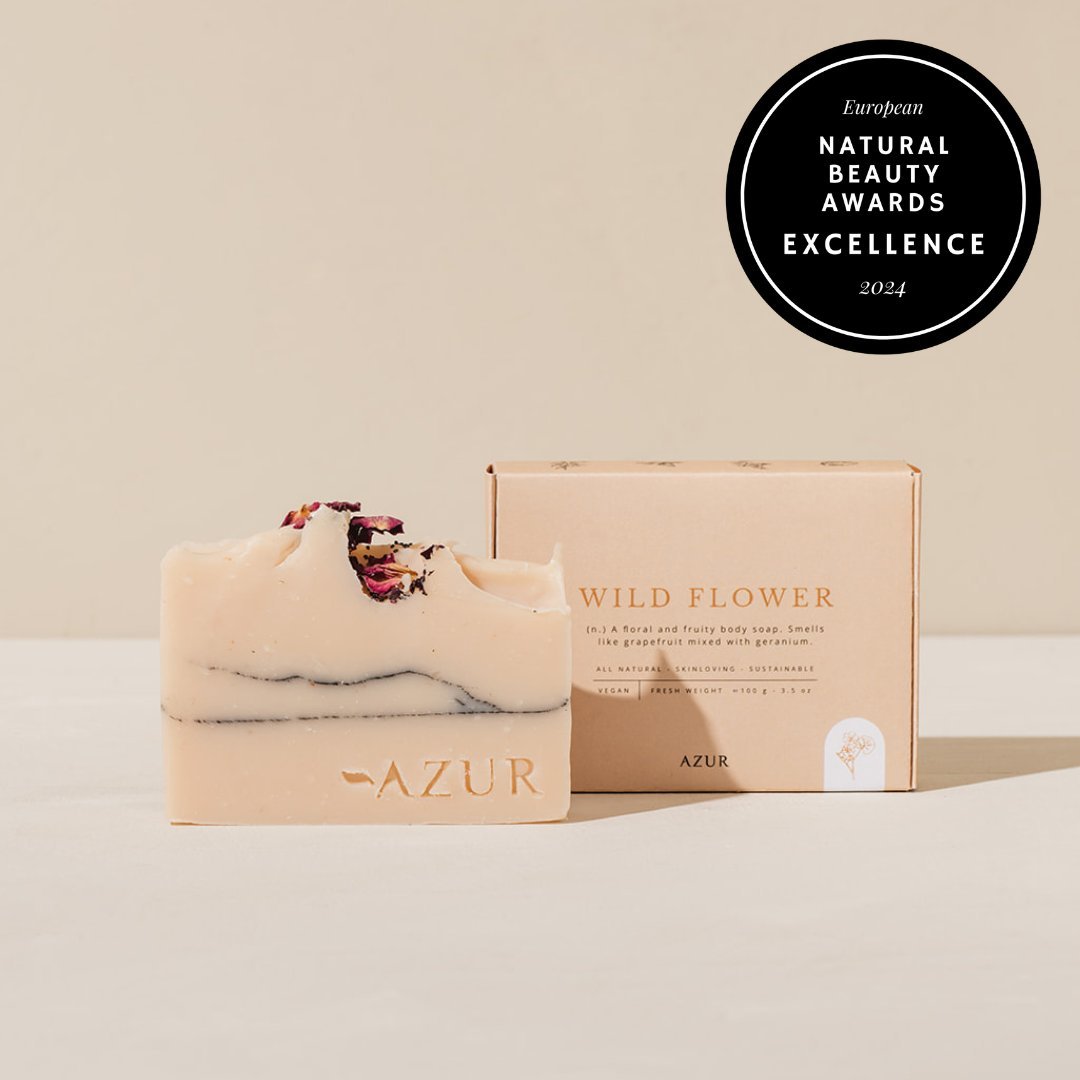
The bar and its carton are drawn as one piece of work, so the thing can be handed over as a present with nothing added to it. The Wild Flower bar won European Excellence of 2024 at the European Natural Beauty Awards. What customers responded to was the scent, and that response is what took the range past soap. Candles arrive in the matching scents, hand poured in the Netherlands with soy wax and pure essential oils, meant to burn beside the bar they belong to, and the magnesium bath salt comes in a glass jar with a bamboo spoon. Then there are the objects that keep a bar going. A sisal bag gives grip and a light scrub and dries the bar faster on its cord, while a slatted wooden dish and an aluminium tin with a drip tray both exist so the water can leave.
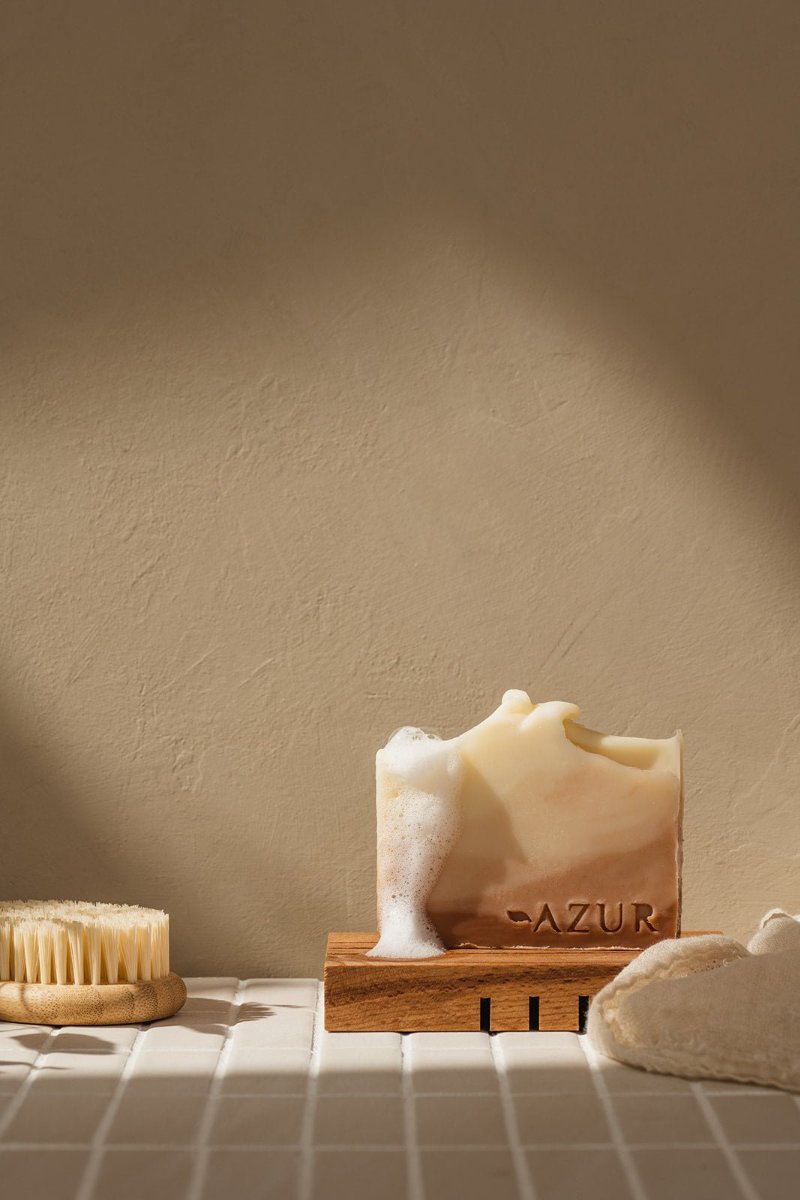
Cut by hand at about a hundred grams, so the weight varies a little.