
3QUARTERS Accessories · Athens, Greece
What a retired life raft leaves behind
When a Greek company showed Garyfalia Pitsaki and John Pitsakis the old ferry rafts it had no use for, the siblings spent some two years learning to work the fabric.
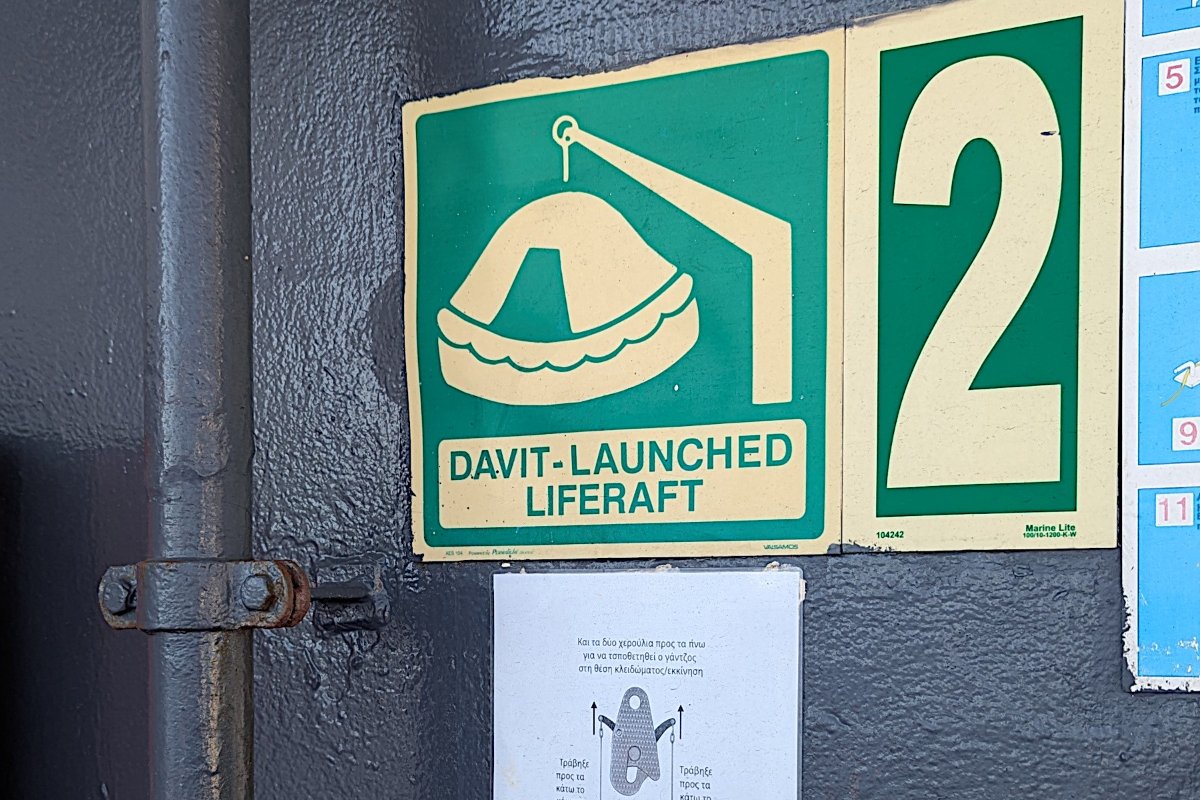
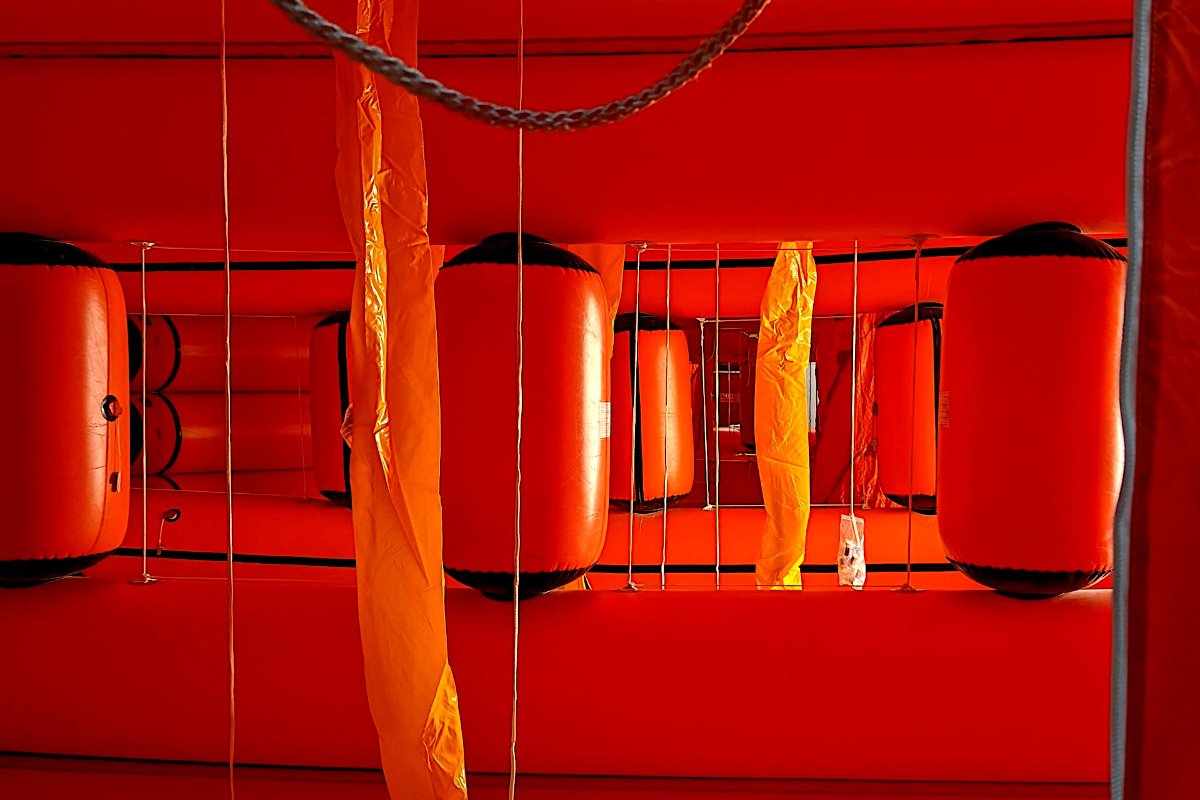
On a Greek ferry, a life raft spends its years packed in a white barrel. Every winter it is taken down, inflated, inspected and packed away again, and after a set lifespan it must be retired, used or not. One company does that work, and its people have done it for about fifty years. They told Garyfalia and John they did not know what to do with the expired rafts. On a visit there, John saw a raft divided into rooms that would still float if it flipped over.
The rafts they took were retired for age, not damage, and as far as John knows were never used beyond the yearly inspection. He says the fabric looks new.
Rope, glue and snapped needles
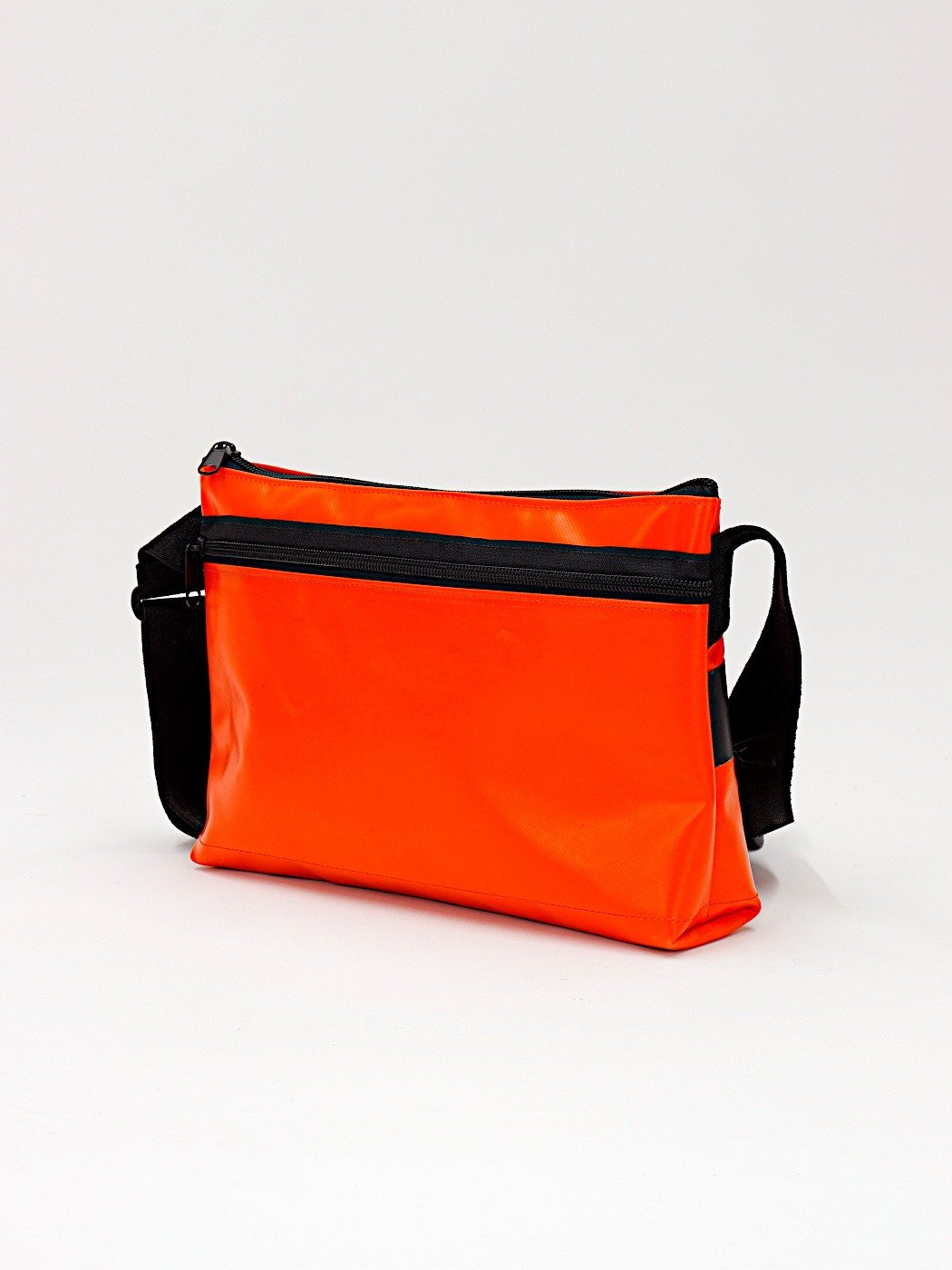
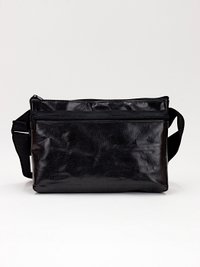
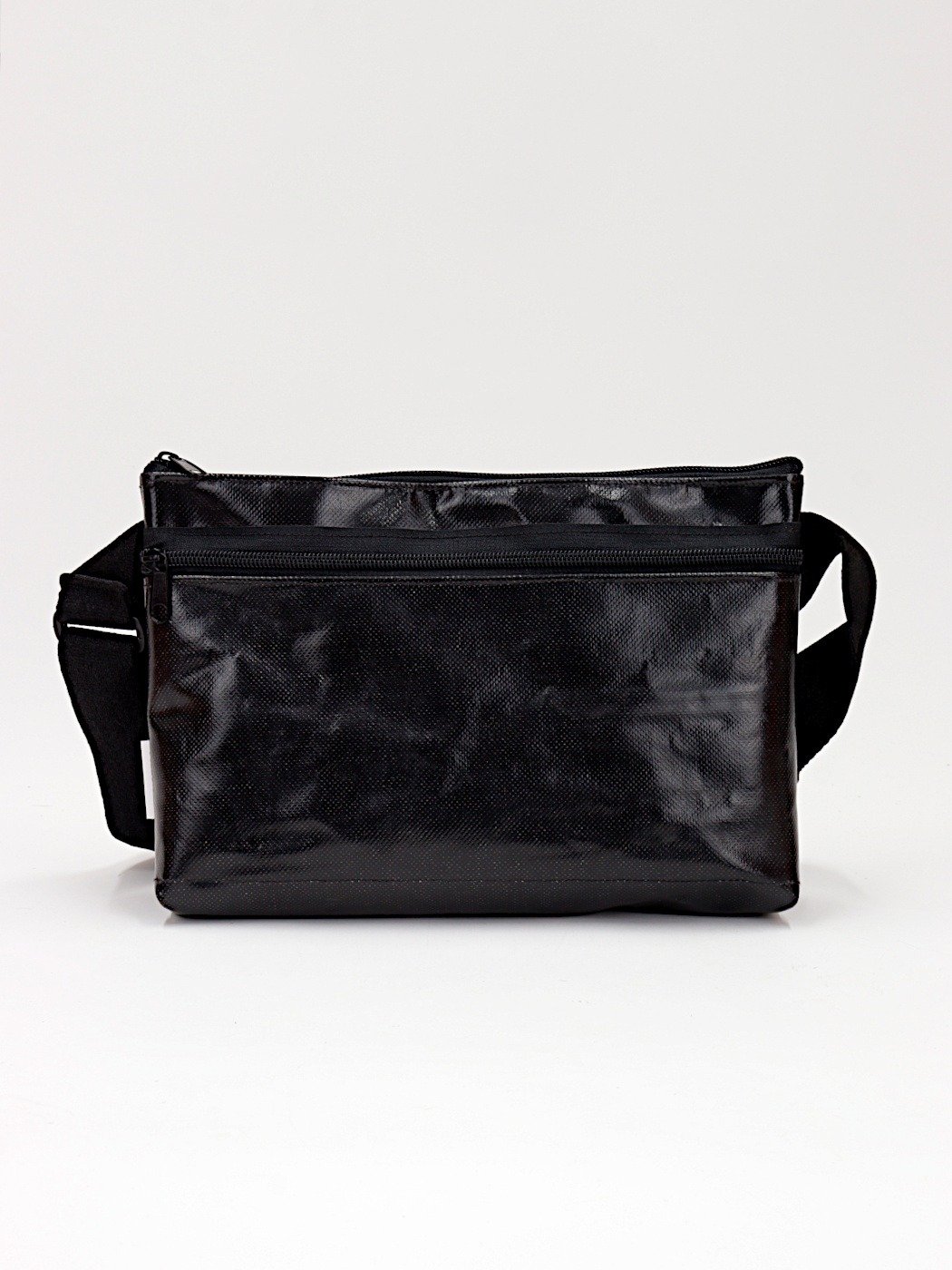
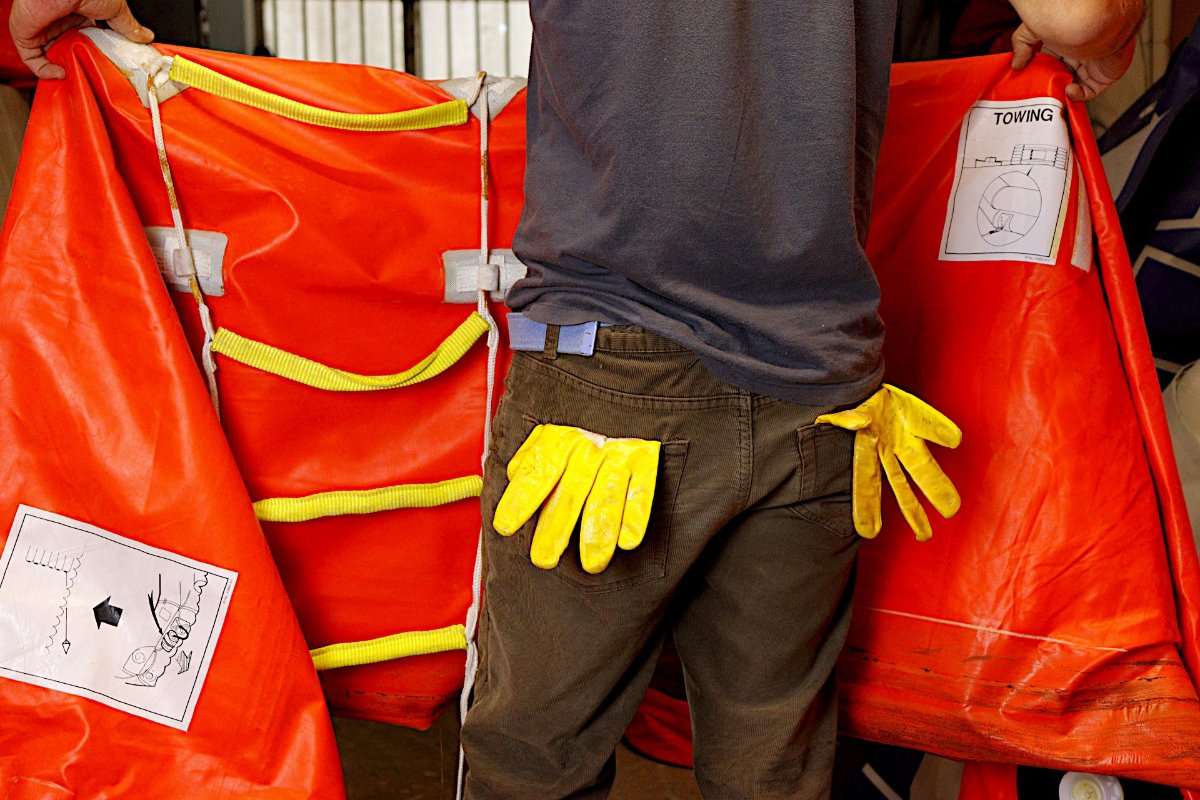
The rafts arrived in containers, tied up with rope, and each had to be taken apart into fabric, ropes, ladders and smaller parts, often with no map of how it was built. The black outer sections are glued to the orange, and separating them is why many bags show glue marks. The rafts' own zips stay behind, no longer usable after years on a ferry, and so do the red straps, which turn out to be boarding ladders.
Every piece is washed of salt, dust and exhaust fumes and cut by hand with very sharp knives. On standard sewing machines the needles kept snapping, so the work moved to heavy machines and specialist needles. Nobody who knew this fabric could be asked. John says they simply spent more time on it, in their workshop in Psyri, which is open to visitors.
Above and below the water
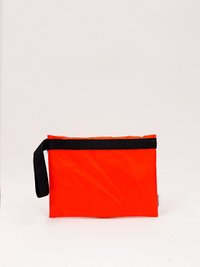
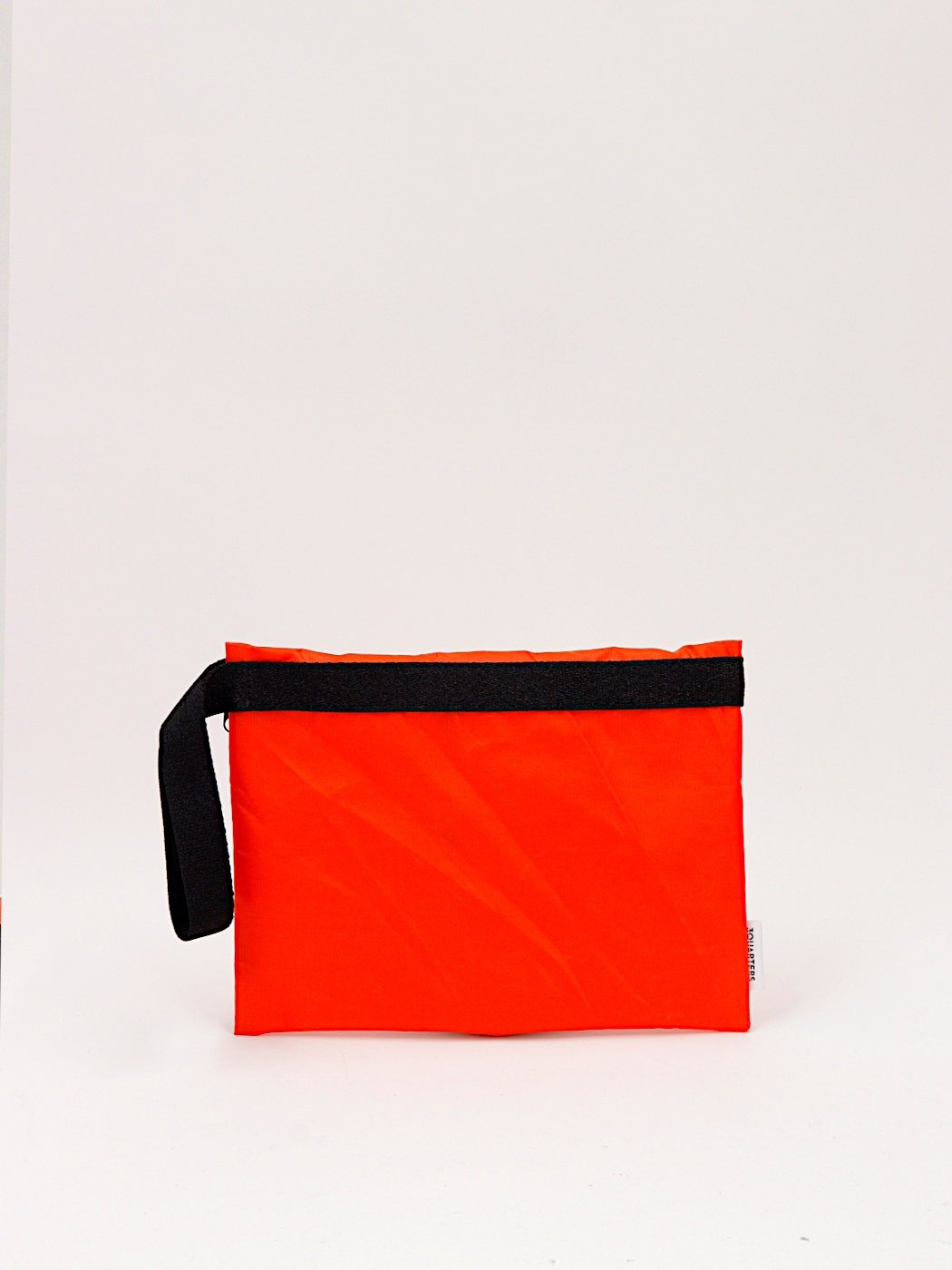
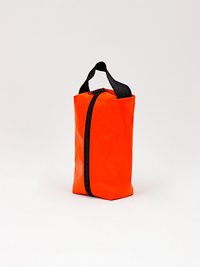
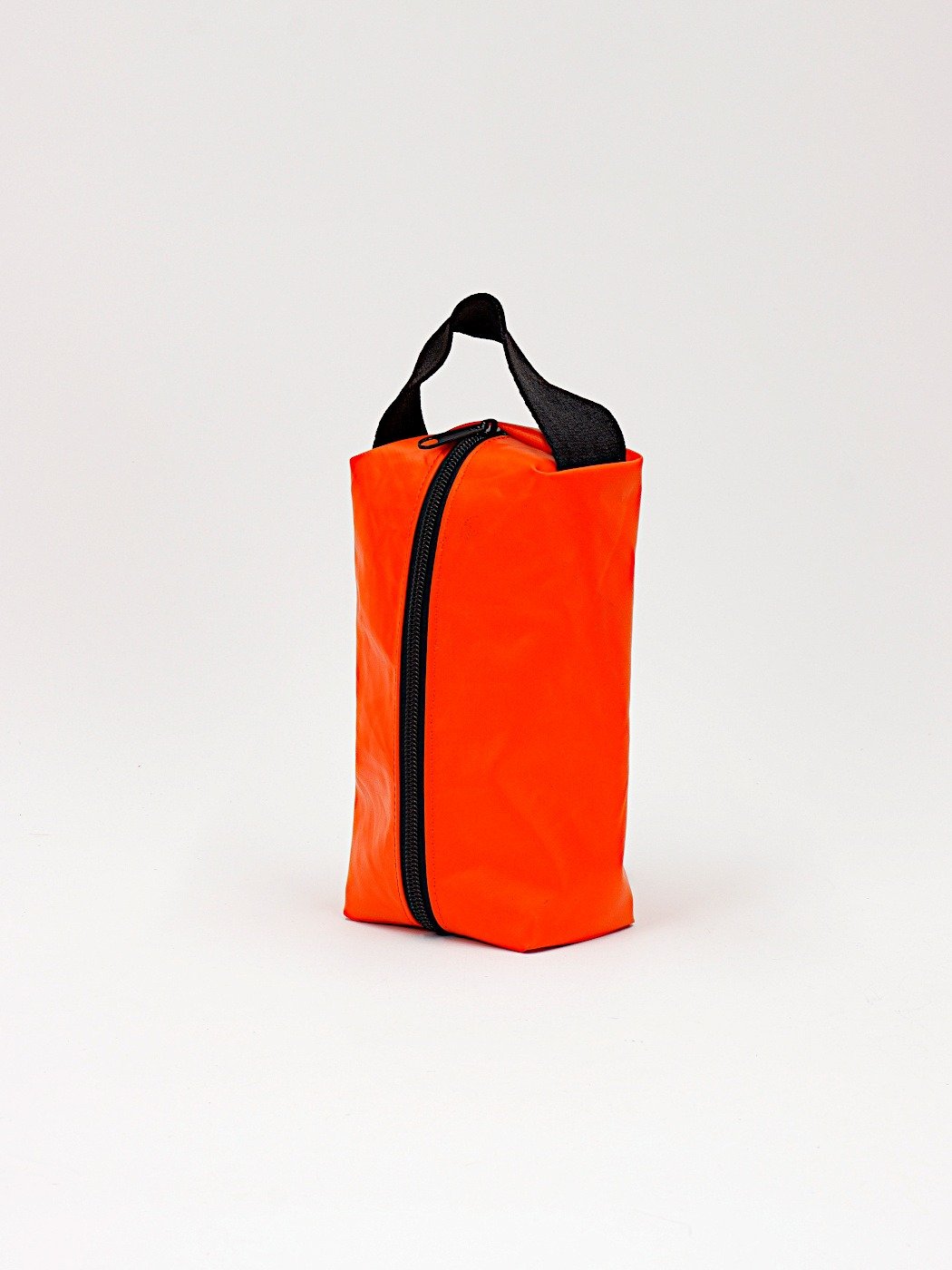
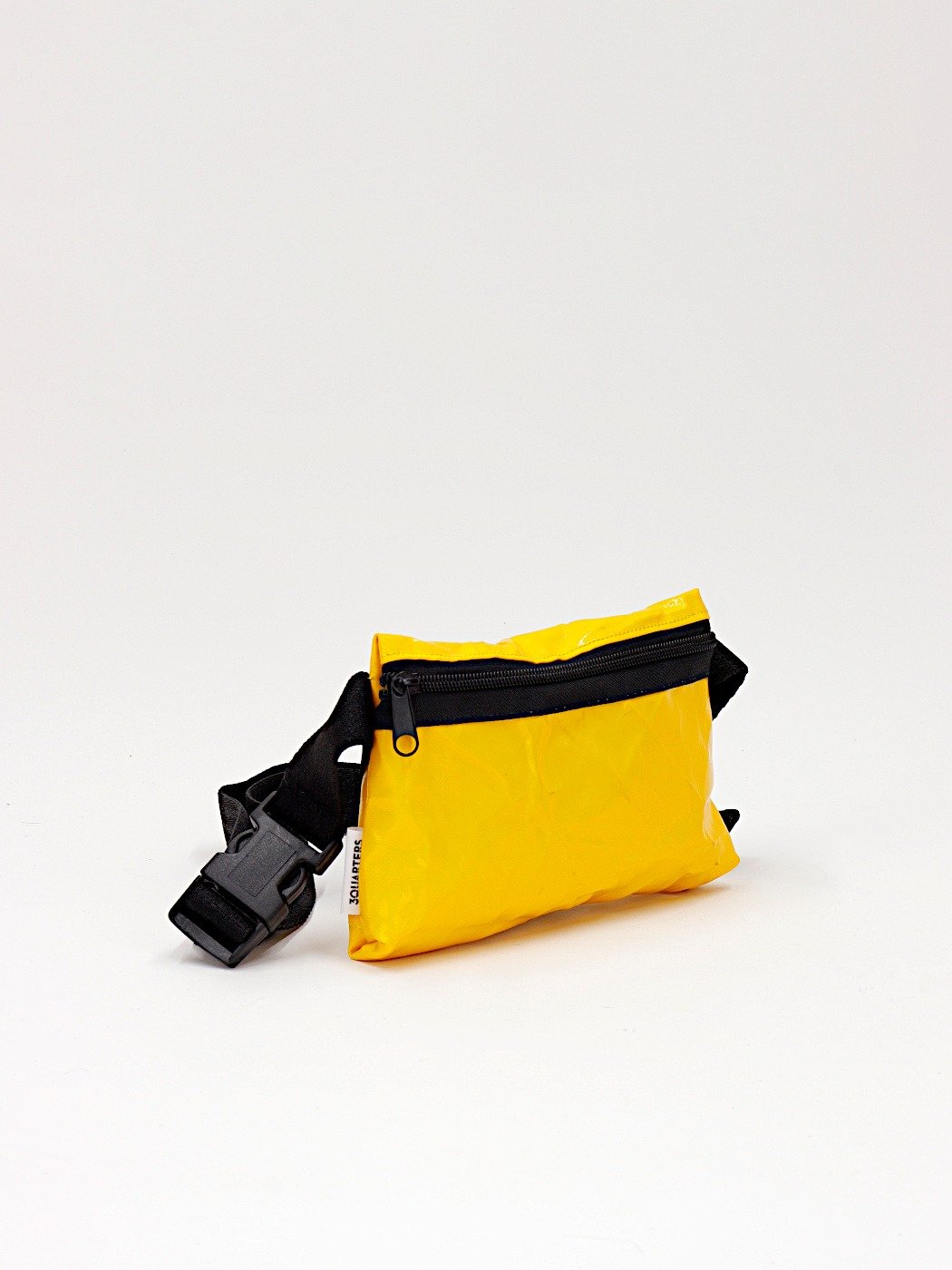
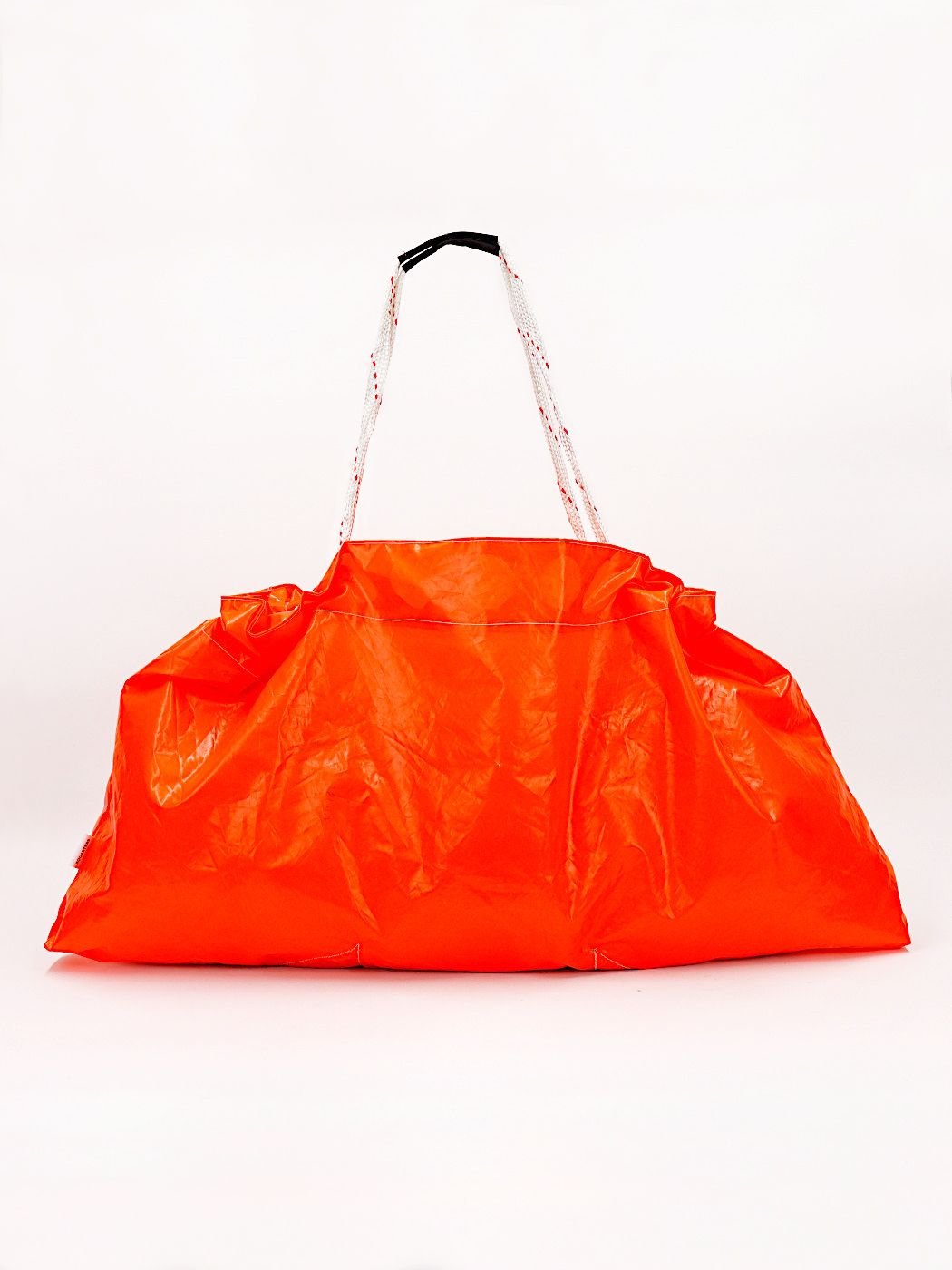
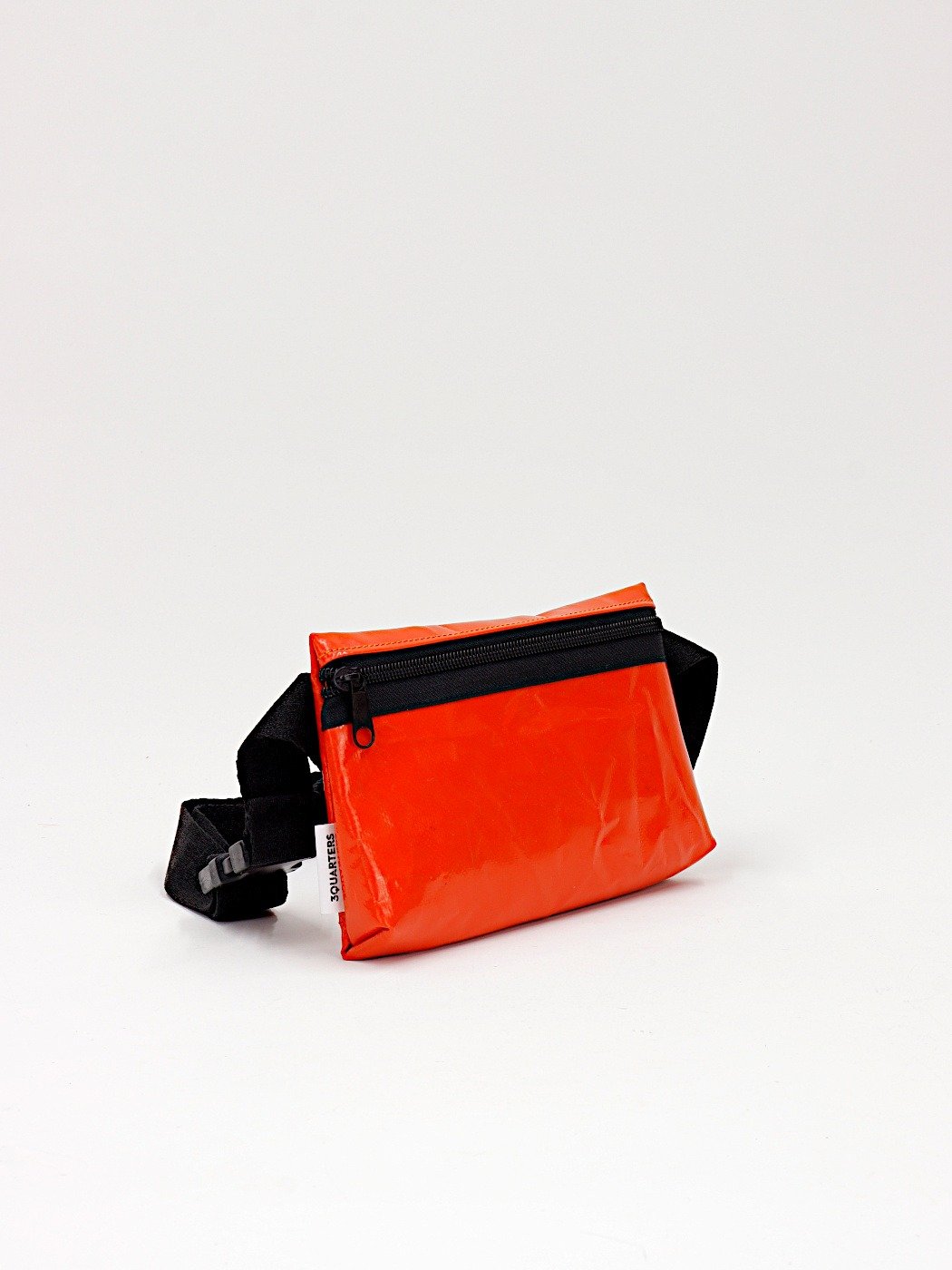
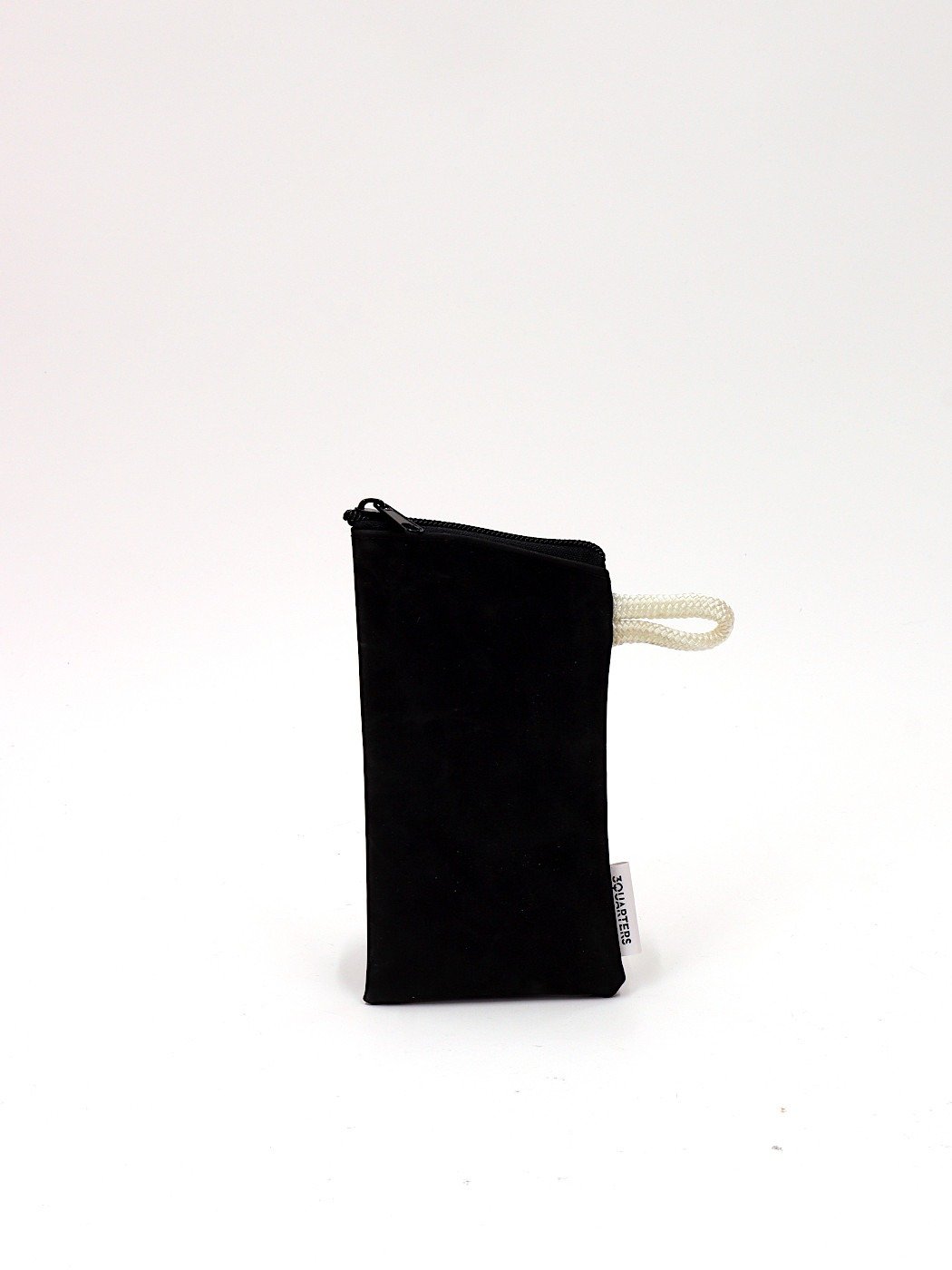
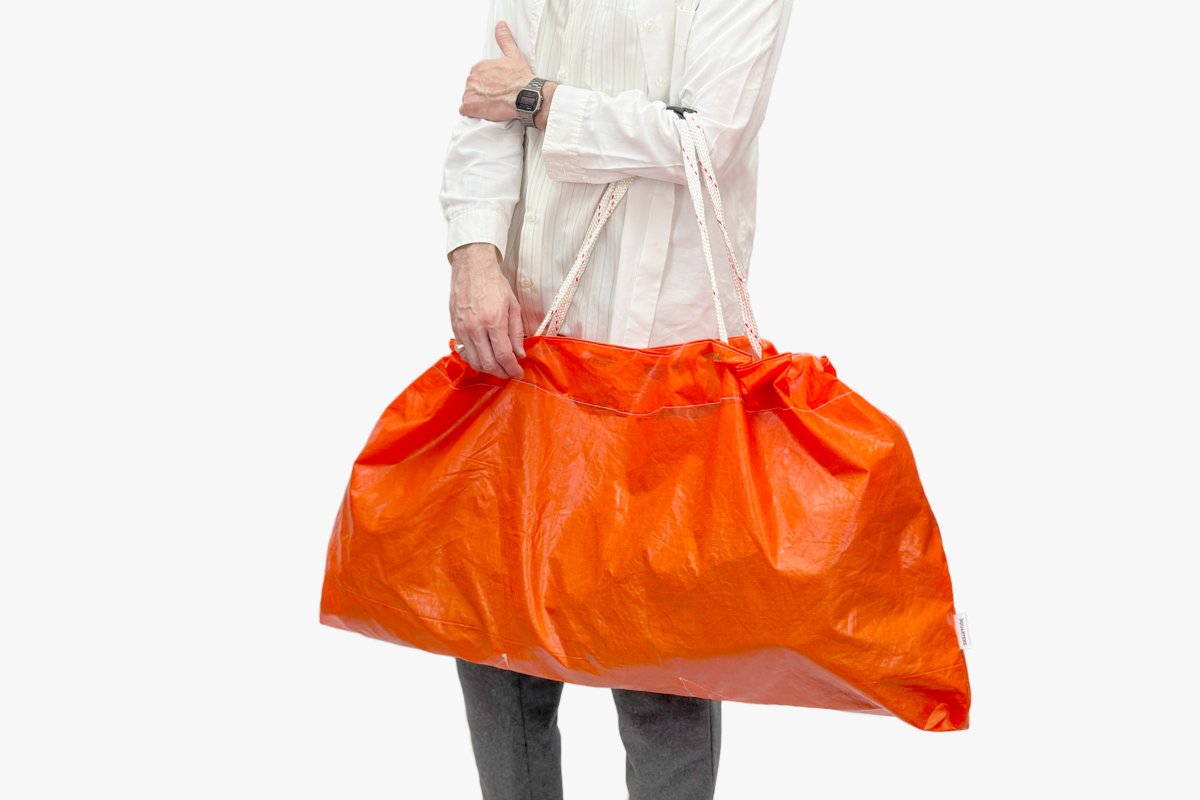
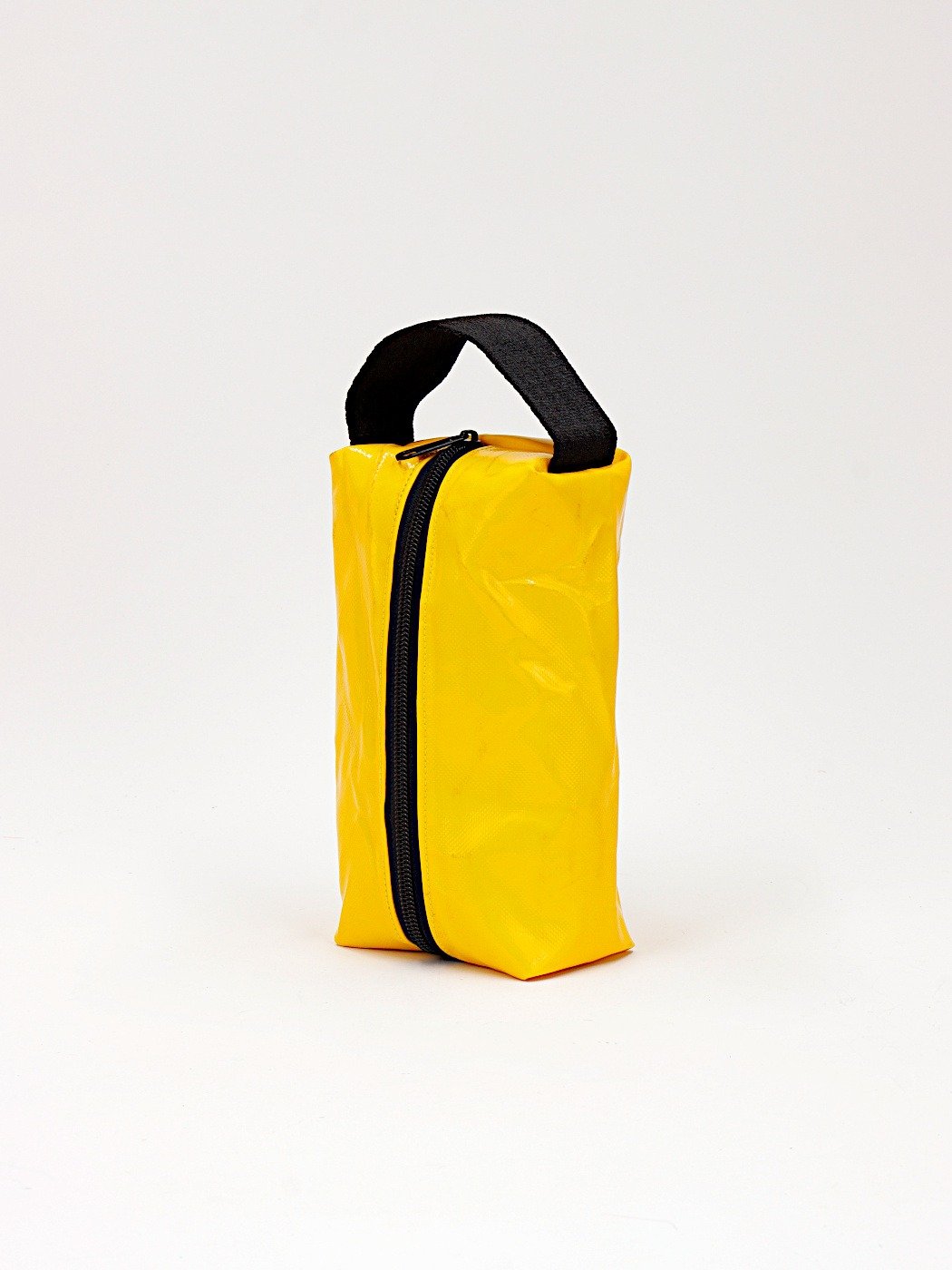
Each colour comes from a different part of the raft. Orange is the canopy, the part seen above the water, and its fabric is soft, matte, light and a little stretchy. Black is the main tube at the bottom that sits in the sea: thick, very strong, with no stretch. Yellow is cut from the water pockets, sacks full of holes that the sea fills to keep the raft from tipping over. That fabric is almost always wrinkled. The creases cannot be ironed out.
The blue one from last year
For its first ten years 3QUARTERS made its bags out of Athenian balcony awnings. That fabric arrived as rolls of the installers' dead stock, and the series never repeated. The name comes from the awnings too. From a balcony, John says, the one across the street is three quarters covered by an awning in a single colour. Customers kept asking for a bag they had seen before, the blue one from last year, which a one-off series could not give them.
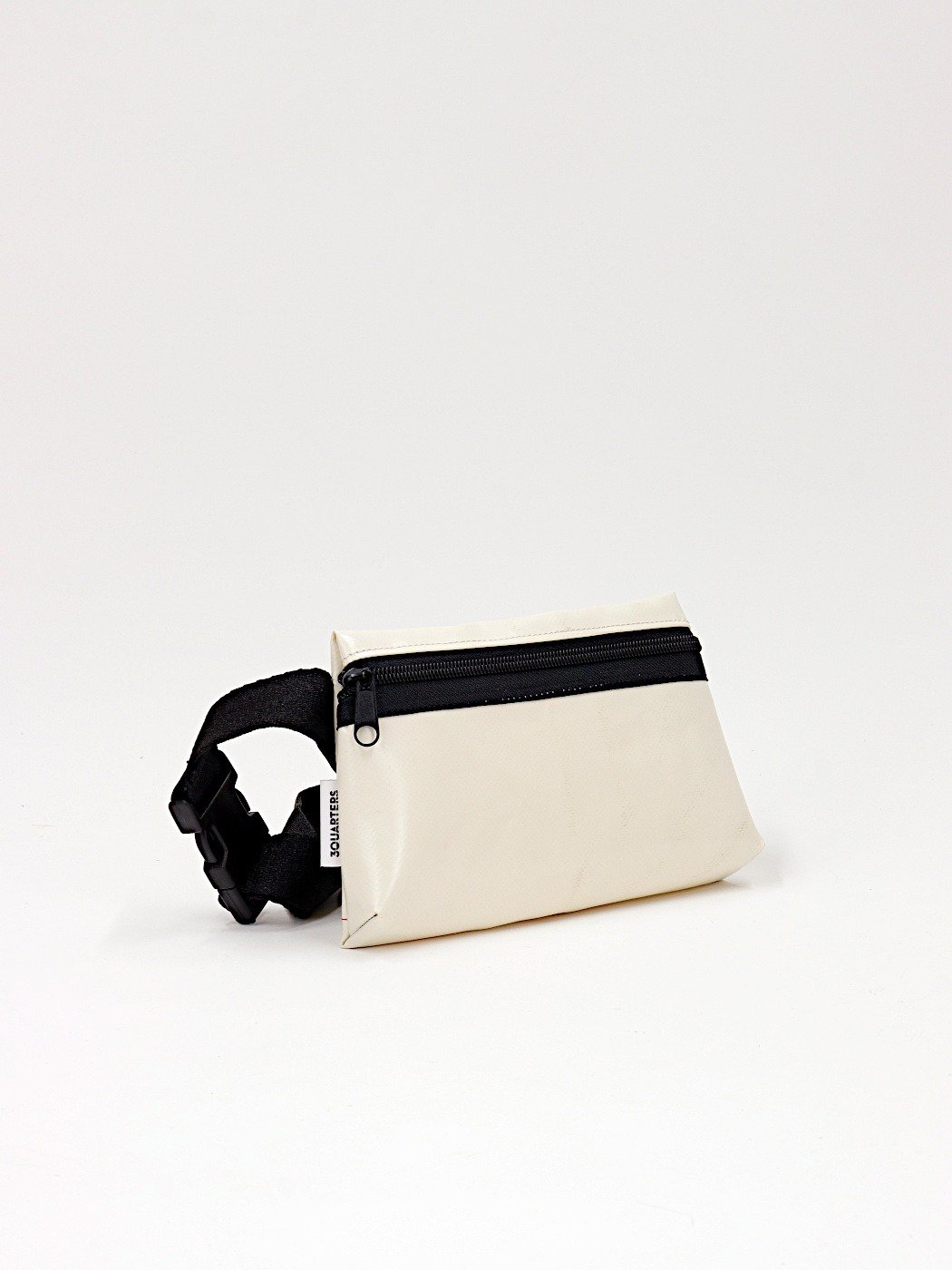
Last winter the siblings turned away from endless colours. The range is now yellow, black and orange, with a little white and red, and they deliberately do not combine colours on one bag. To John, each colour says how much its wearer wants to be noticed.
Their shop window carries a sign that reads "you don't need this bag". Visitors who liked a bag used to ask whether they needed it. John told them no. Most, he says, bought it anyway.
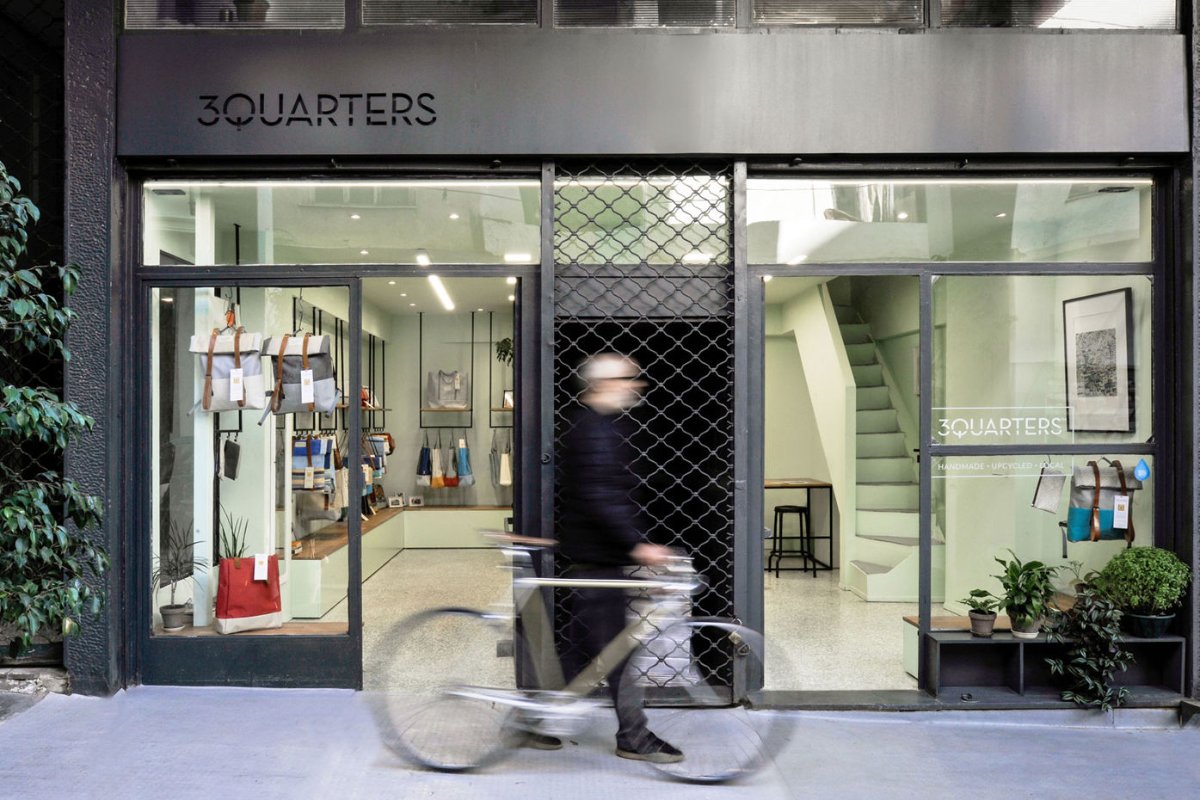
Bags are mended for free; those past saving are stripped for parts, like the rafts.