
Buying more sustainably: what to look for
"Sustainable" is on almost every label now, which makes it close to useless as a signal. Buying more sustainably comes down to a few things you can actually check: what a material is made of, where it came from, and whether it was built to last. Here is what to look for.
There is no single label that settles it, and no certificate that does the thinking for you. Buying more sustainably is really a habit of looking closer: at what a thing is made of, at where it was made, at how long it is meant to last. A few questions, asked before you buy, get you most of the way there.
Buying more sustainably starts with what you already own
The most sustainable shirt is the one already in your wardrobe. Secondhand, swapping and repairing are almost always the lower-impact choice, and usually the cheaper one. Sometimes a new thing is genuinely needed. When it is, the aim is a considered choice rather than a perfect one.
Why avoid fossil-based materials?
Synthetic fibres, faux leather and many performance fabrics are made from petroleum. They add to the climate crisis, shed microplastics, and can take centuries to break down. Most also carry a long list of chemicals whose effects are barely understood, and those can reach the body through wear or wash out into the water system.
Recycled plastics are not the fix they seem to be. They stretch out the life of fossil-based material without ending our reliance on it, and they still carry those chemicals. Recycled polyester, or rPET, is the clearest example. It is rarely recycled back into new fabric and mostly comes from drinks bottles, which shifts the problem rather than solving it. Textiles do not need PET.
Which natural materials are worth choosing?
Where you can, choose renewable, natural materials. Cotton, wool, linen, ramie and vegetable-tanned leather can all belong in a genuinely sustainable wardrobe, as long as they are responsibly sourced.
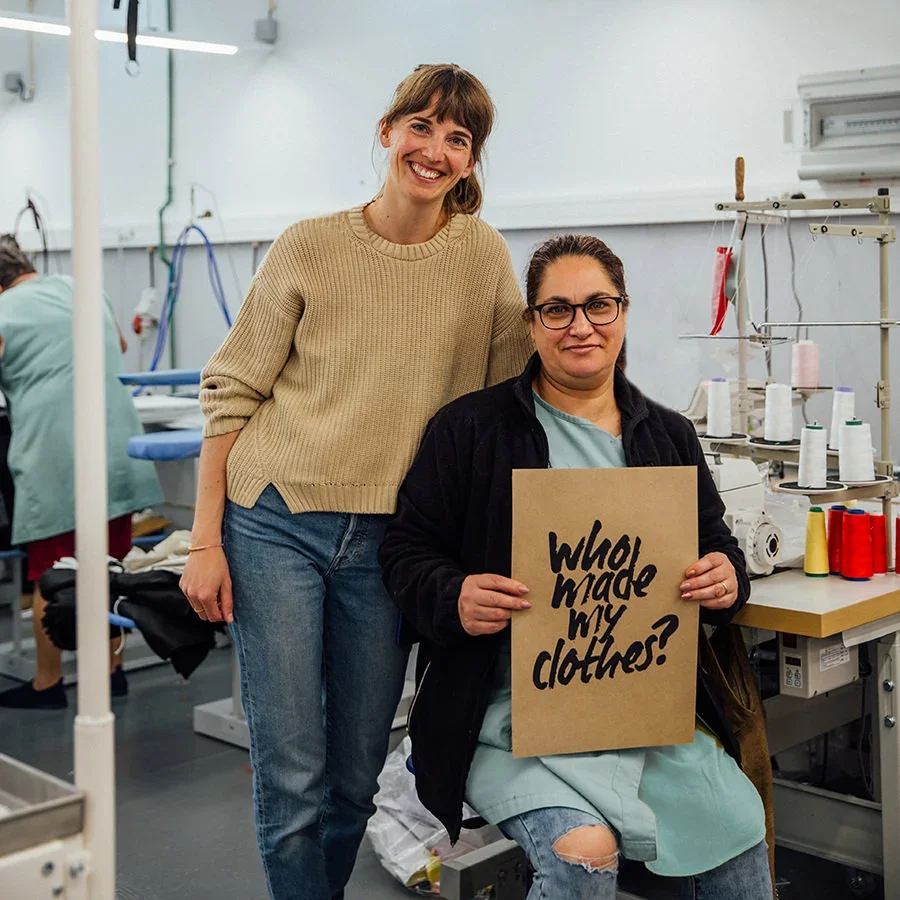
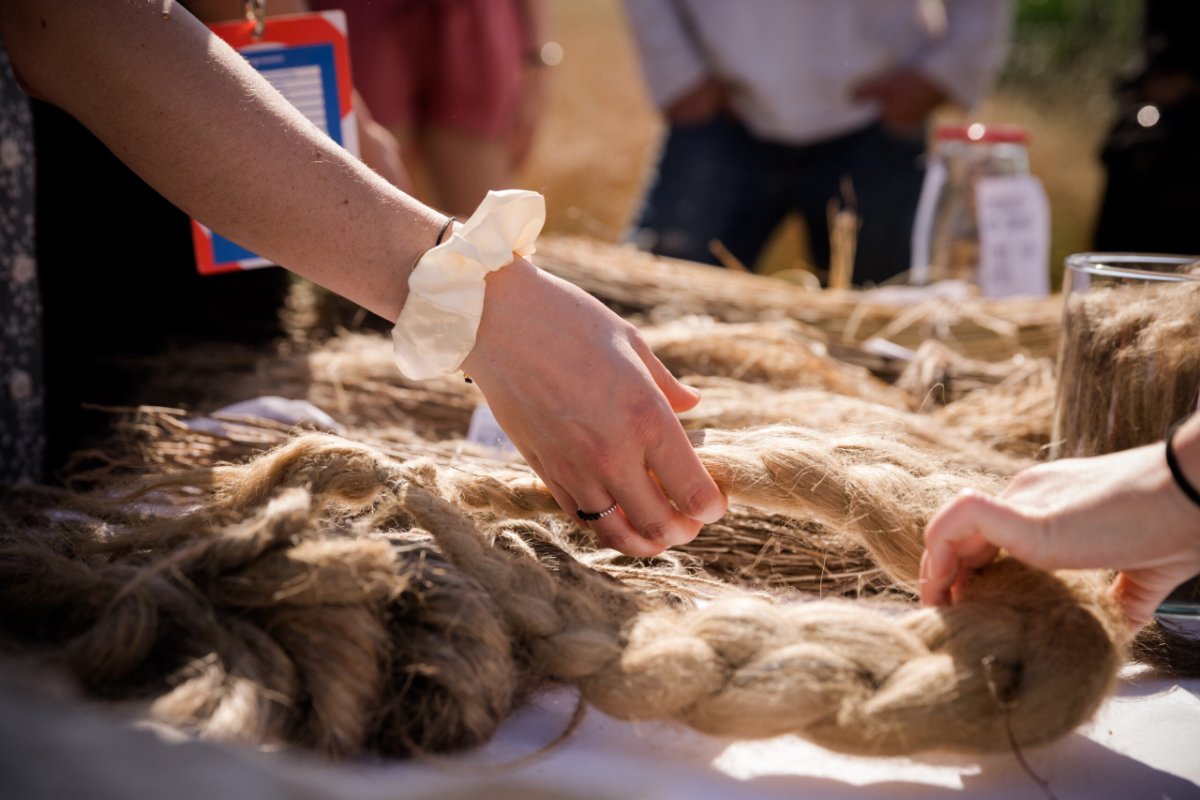
The best of them come from regional, traceable production that is open about its origin and the people behind it, because social sustainability counts as much as the environmental kind. You can see it in a label like Matona, which sews its organic cotton and linen in GOTS-certified workshops in Europe and designs its clothes to be passed on rather than replaced. Or in intuism.crafts, which works mainly in linen, a natural fibre spun from flax that is renewable, breathable and free of plastic, and that returns cleanly to the soil once it is worn out. The cloth comes from Vieböck, a long-established Austrian linen weaver working in certified-organic European flax, and each piece is then hand-finished by the maker in techniques like sashiko stitching. She even grows a little flax on the family farm herself, worked into the odd finishing detail, and is open about where the cloth is woven, which is exactly the kind of traceability worth looking for. If that openness is missing, ask where the material comes from, how it is processed, and under what conditions. Energy matters too. A workshop running on renewable power has a far smaller footprint than a coal-fired factory, and coal-fired factories are still common in some places.
What does it mean to think in lifecycles?
A material's impact runs across its whole life, well beyond the moment it is made. Three things are worth weighing:
- Biological cycles let natural materials return safely to the earth.
- Technical cycles recover, remake or reuse a product, then break it down for recycling once it can no longer be used.
- Longevity and repairability matter most, since a thing that lasts for years and can be mended beats a short-lived "green" product every time.
Choosing quality over quantity cuts waste and rewards more careful buying. There is a quieter satisfaction in it, too, in keeping something made to last.
How do you spot a vague sustainability claim?
Plenty of brands advertise "recyclable" or "circular," but a claim only means something when the system behind it actually works. Knowing how a product ends its life matters as much as knowing where it began. Treat loose words like "eco," "vegan" and "sustainable" as reasons to ask more questions. Certificates can help, though they are one piece of a larger picture rather than proof on their own.
The takeaway
There is no perfect way to shop, and chasing one misses the point. The work is smaller and more ordinary than that: informed choices, honest questions, and a bias towards things that will last. Often the most sustainable item is the one you already have, used well, repaired when it needs it and kept for years. Small choices add up.
You might wonder:
What does "sustainable" actually mean when I am shopping?
On a label, very little on its own. It is an unregulated word that any brand can use, so read it as a starting point rather than a guarantee. What tells you more are the specifics: the material, its origin, the working conditions, and how long the product is built to last.
What are the most sustainable materials to buy?
Renewable, natural materials are the safest choice: cotton, wool, linen, ramie and vegetable-tanned leather, as long as they are responsibly and traceably sourced. At the end of their life they can return to the earth, unlike petroleum-based synthetics.
Is recycled polyester (rPET) a sustainable choice?
Less than it sounds. Most rPET comes from plastic bottles rather than worn-out textiles and is rarely recycled again into fabric, so it prolongs the life of fossil-based plastic instead of replacing it, and it still carries the same chemical load.
How can I tell whether a brand's sustainability claim is real?
Look for specifics and for a working system behind the words. Ask where materials come from, how they are processed, and what happens to the product at the end of its life. A brand that answers plainly is more convincing than one leaning on terms like "eco" or "circular."
Is buying secondhand better than buying something new and sustainable?
Usually, yes. Reusing, swapping or repairing what already exists avoids the impact of making anything new, which is why the most sustainable option is often the one already in your wardrobe. New makes sense when a real need cannot be met any other way.
Brands in this story
Brands in this story

 Matona / OrganicOrganic cotton, cut for the family · VorarlbergSee the brand →
Read by people who care how things are made.
ledge Magazine lands once a month, free.
The archive opens as the editions grow.