Small on purpose: what upcycling can and can't do
Upcycling will never fix the waste problem. Too slow, too small, too dependent on whatever happens to be thrown away. We think that is exactly what makes it worth looking at, and we went looking for the people doing it well.
After the ferry
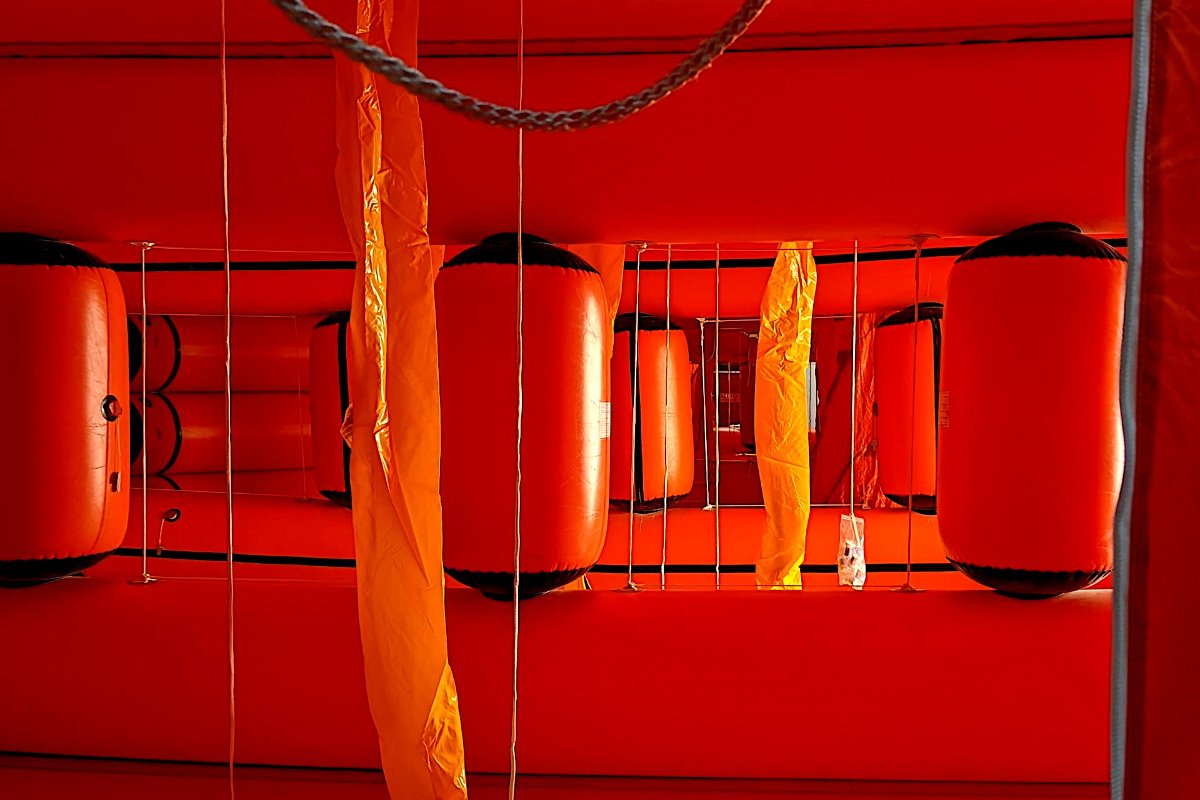
On a Greek ferry, each life raft spends its years packed in a white barrel. Every winter the rafts are taken down, inflated, inspected and packed away again. After a set lifespan they have to be retired, whether they were ever used or not. The company that does this work told the founders of 3quarters that it did not know what to do with the expired ones.
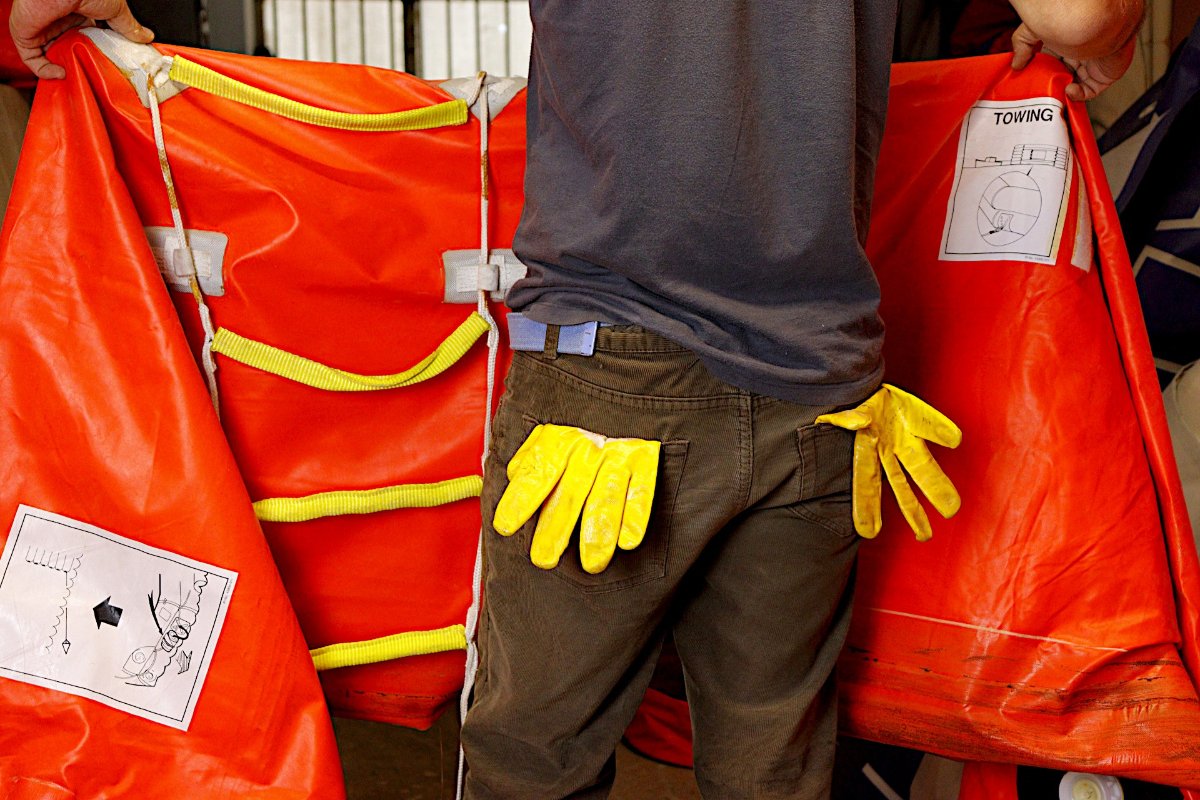
Those founders are Garyfalia Pitsaki and her brother John Pitsakis, who run a workshop in Psyri, in central Athens. Neither came from fashion. Garyfalia trained as an architect. For their first ten years they made bags from old balcony awnings. Then the rafts arrived, in containers tied up with rope, and the siblings spent about two years learning to take them apart and sew them. On standard machines the needles kept snapping. John's wife, Diti Kotecha, runs a second Athens label made from waste, Théla, which comes up below. By John's account the two hardly compete, because they reach completely different people.
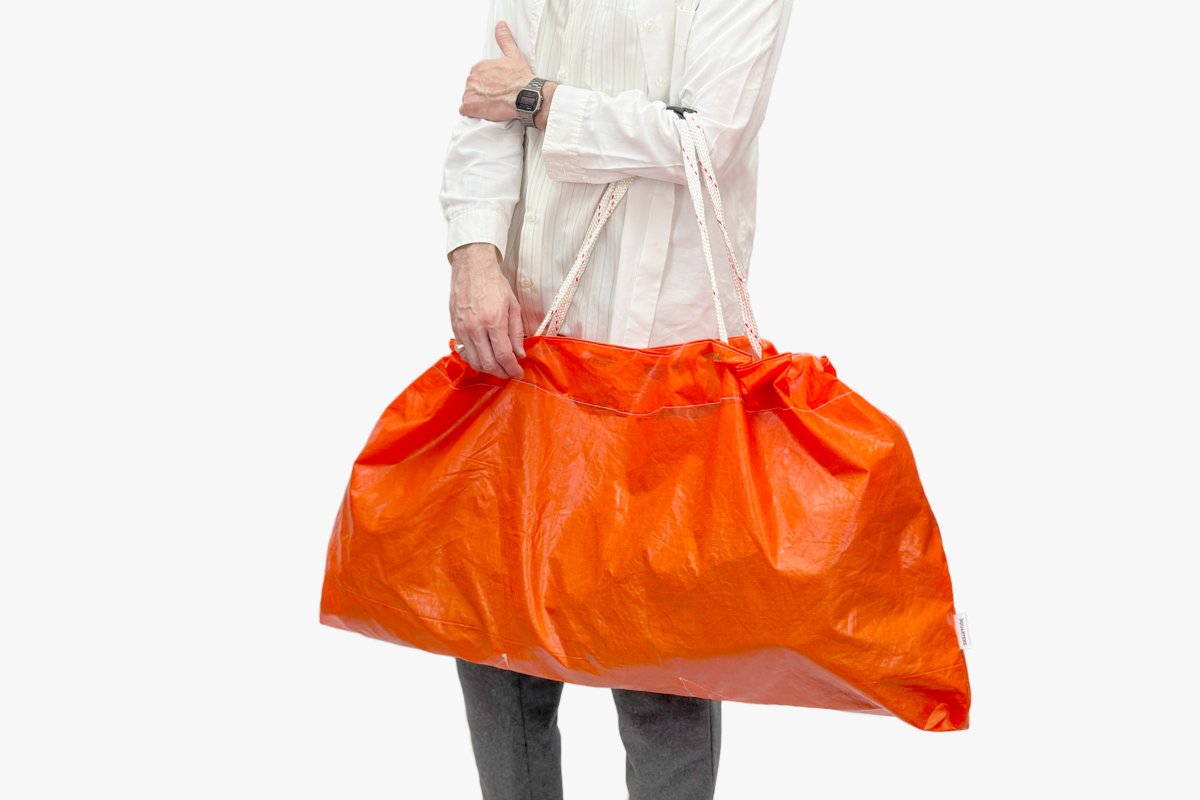
Each colour comes from a different part of the raft. Orange is the canopy, the part you see above the water. Black is the heavy tube that sits in the sea. Yellow comes from the water pockets that keep the raft from tipping over, and its creases never iron out. The fabric is hard to tear and shrugs off dirt and scratches. Last winter the siblings stopped chasing new colours and kept to these three, never combined on one bag. To John, the colour you pick says how much you want to be noticed.
Too small to save anything
Let me start with the strongest case against what follows. Upcycling does not scale. Critics of upcycling put it neatly: fifty glass jars make fifty lamps, and then what? The flow of things we throw away is far larger than any workshop can absorb. Glue, paint and new hardware can even make an object harder to recycle later. If the question is how to deal with the world's waste, the answer is less packaging, better recycling and better rules. A bag made from a ferry raft is not on that list.
I agree with all of that. And I still think upcycling matters, for a reason that has little to do with tonnes.
Most of what we own arrives without a past. It was made somewhere we will never see, by people we will never know, from materials nobody can name. An upcycled object is the opposite. Its history is the whole point. You can say where it came from, what it did before, and who decided it deserved another go. Zachi and I started ledge because we wanted things to come with their makers attached. Upcycling goes one step further. It comes with the material's story too.
In this edition's title story our editor Mirjam writes that knowing how a thing was made changes how we treat it. Upcycling may be the purest case of that. It is hard to throw away a bag once you know it was cut from a ferry's life raft.
Upcycling, deadstock, recycling: the difference
Upcycling means turning something that has been used or thrown away into a new product without breaking it down first. The terms around it are used loosely, often on purpose. This is how we use them at ledge.
Deadstock is new: a roll of fabric that left the mill and was never cut. Upcycling starts with something already used or thrown away, and it is the only subject of this piece.
A ladder of things nobody wanted
The brands we found sort themselves into a kind of ladder. At the bottom sits the cheapest thing we throw away. At the top, a material so precious that the waste is the best part.
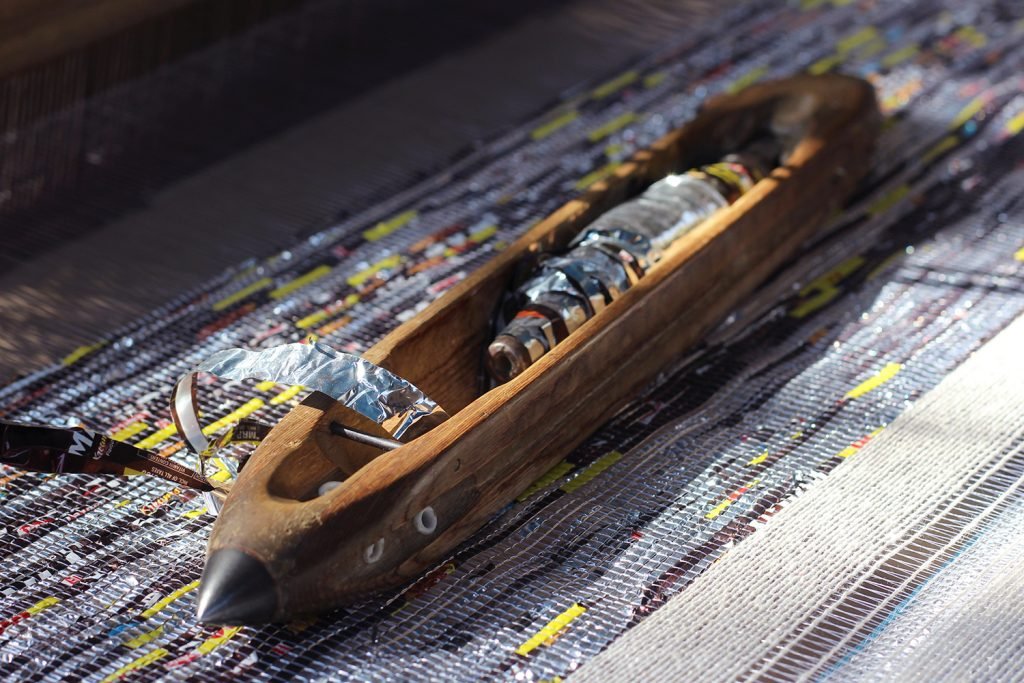
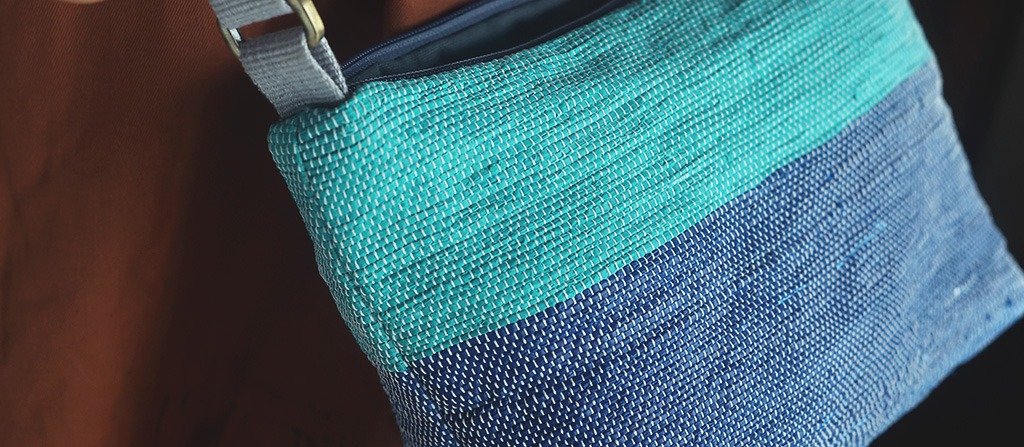
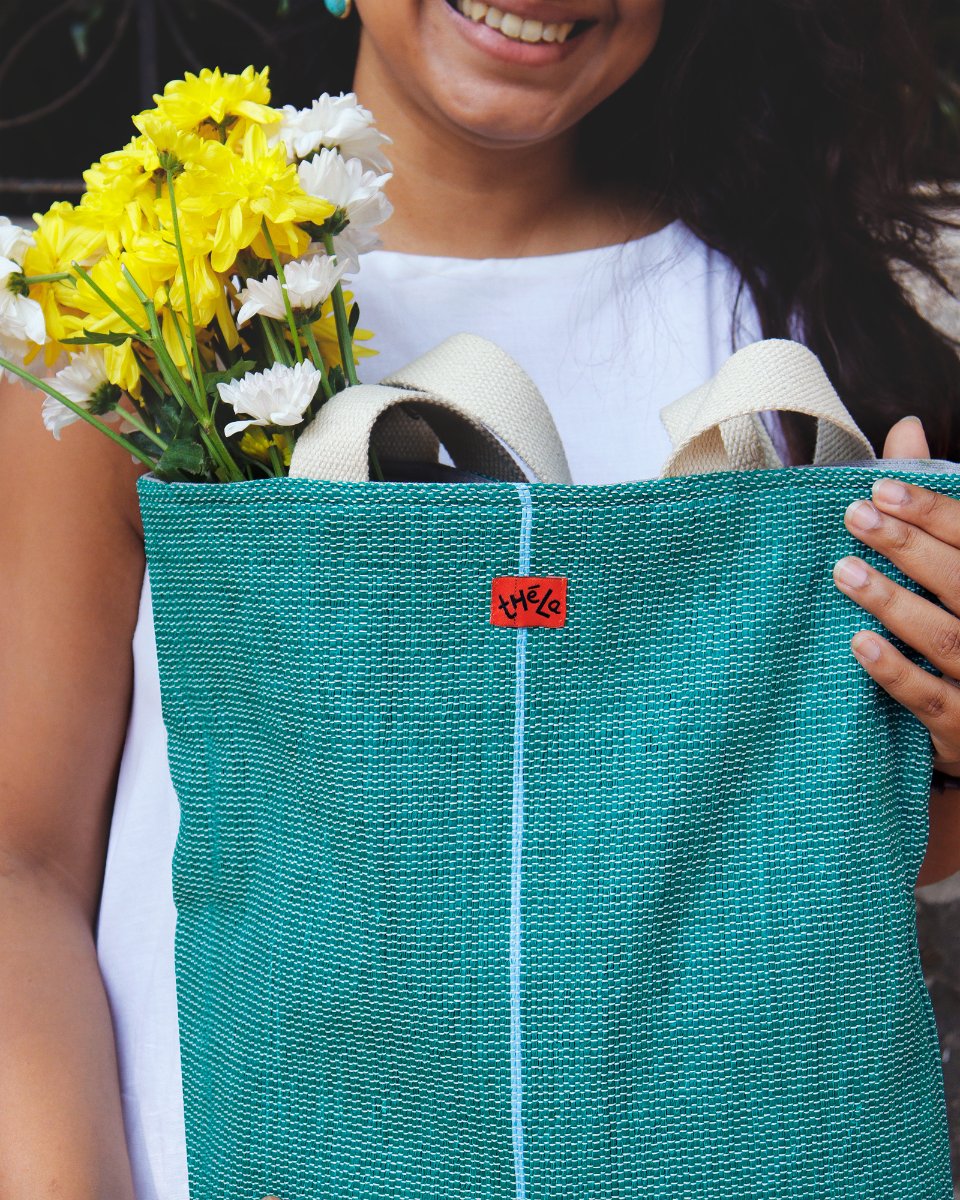
Plastic packaging. Diti Kotecha started Théla in Athens as a hobby, crocheting plastic she had gathered herself. The idea is so bold it almost feels naive. Once you see the finished pieces, though, you start to appreciate her vision even more. Today the cloth is woven by hand in India from packaging and farm film that was already on its way to landfill. "Our products are made of plastic that doesn't look like plastic," she says. "You need to feel it to believe it."
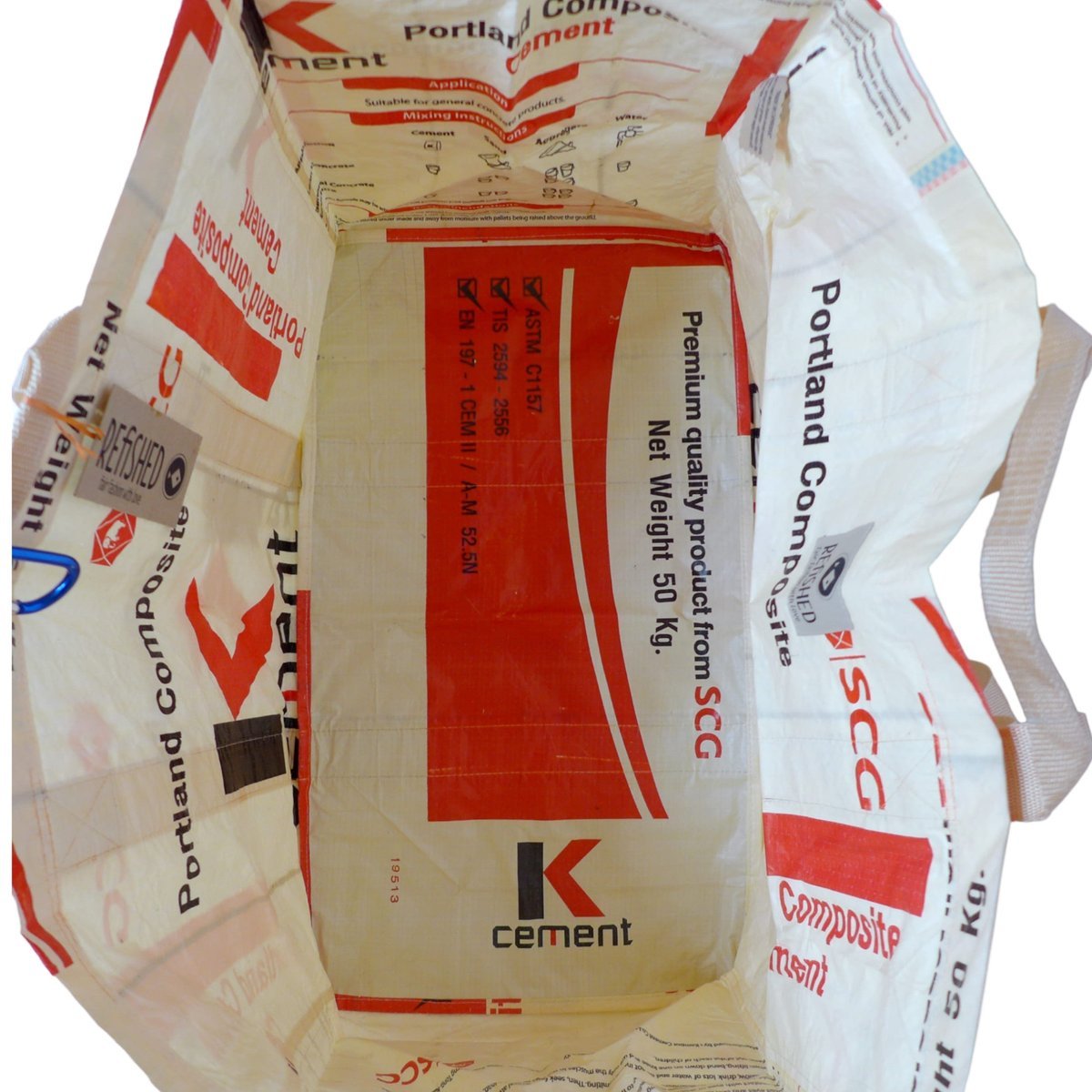
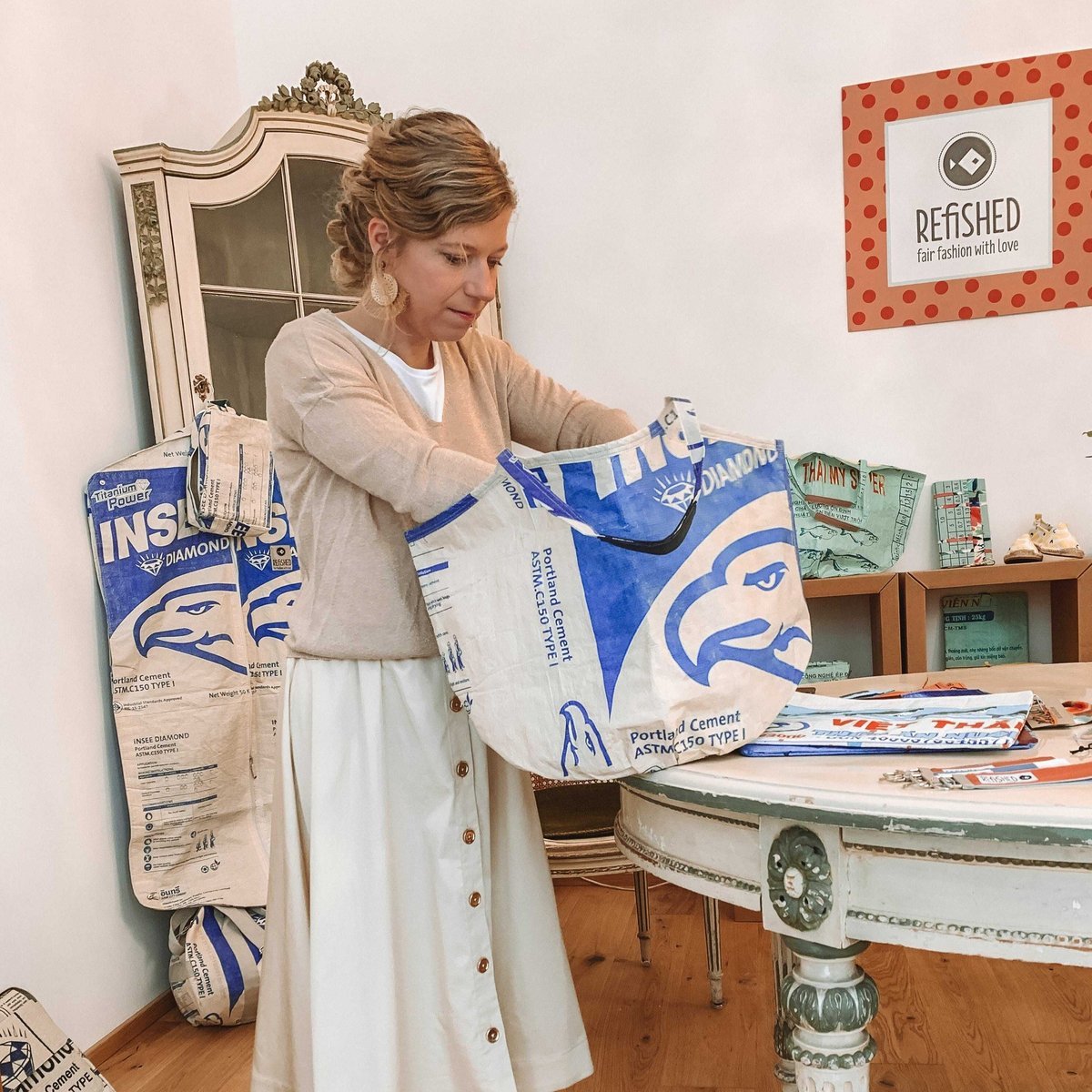
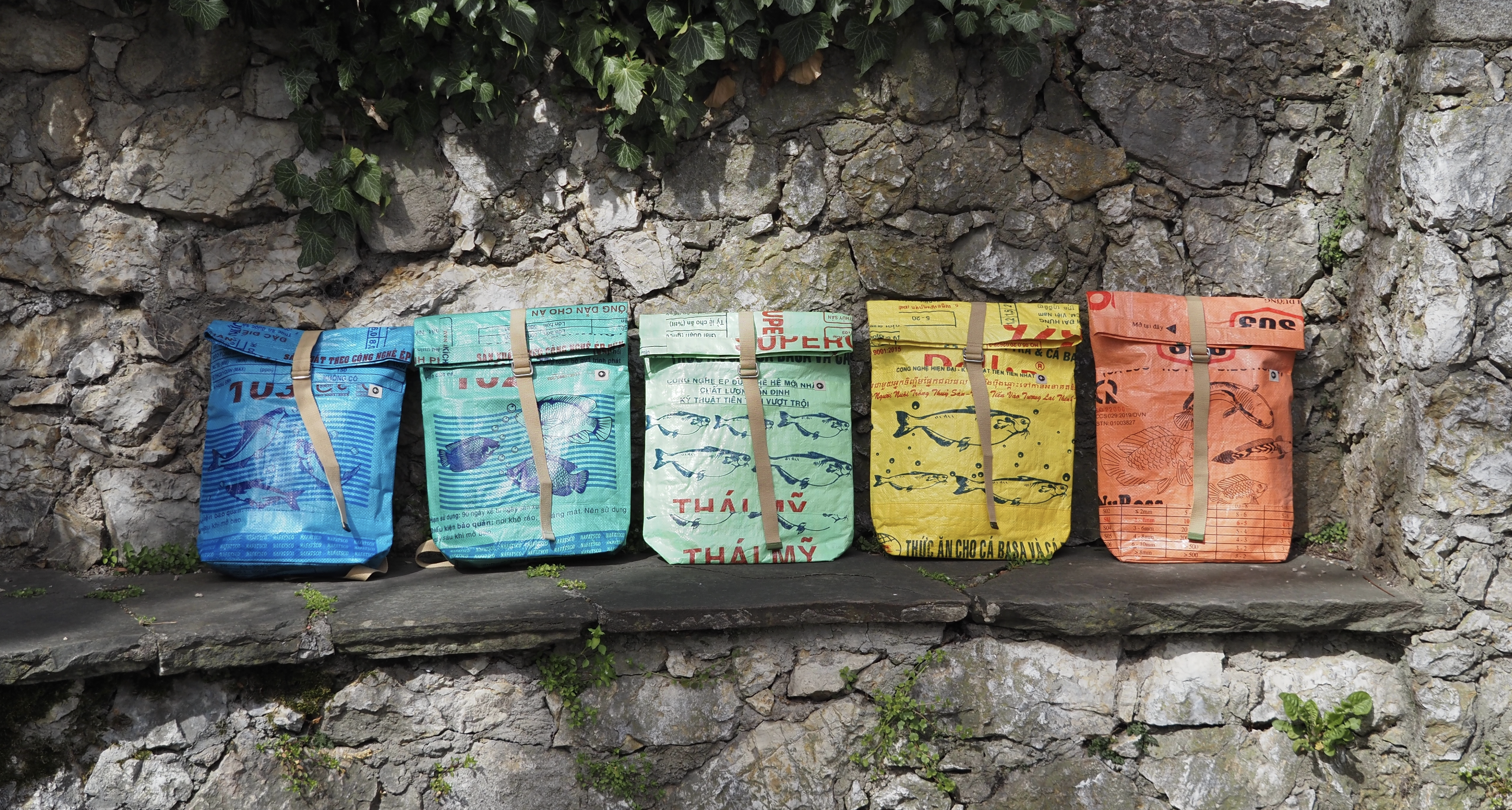
A sack. Rice, cement and fish feed are sold in Cambodia in woven sacks, each printed for the job it once did. REFISHED buys them at markets in packs of ten, cleans them and has them sewn into bags. Because every sack was printed differently, no two bags come out alike. Sissi Vogler started the label in Vienna in 2012, after the first samples were sewn from used cement bags on a trip through Cambodia.
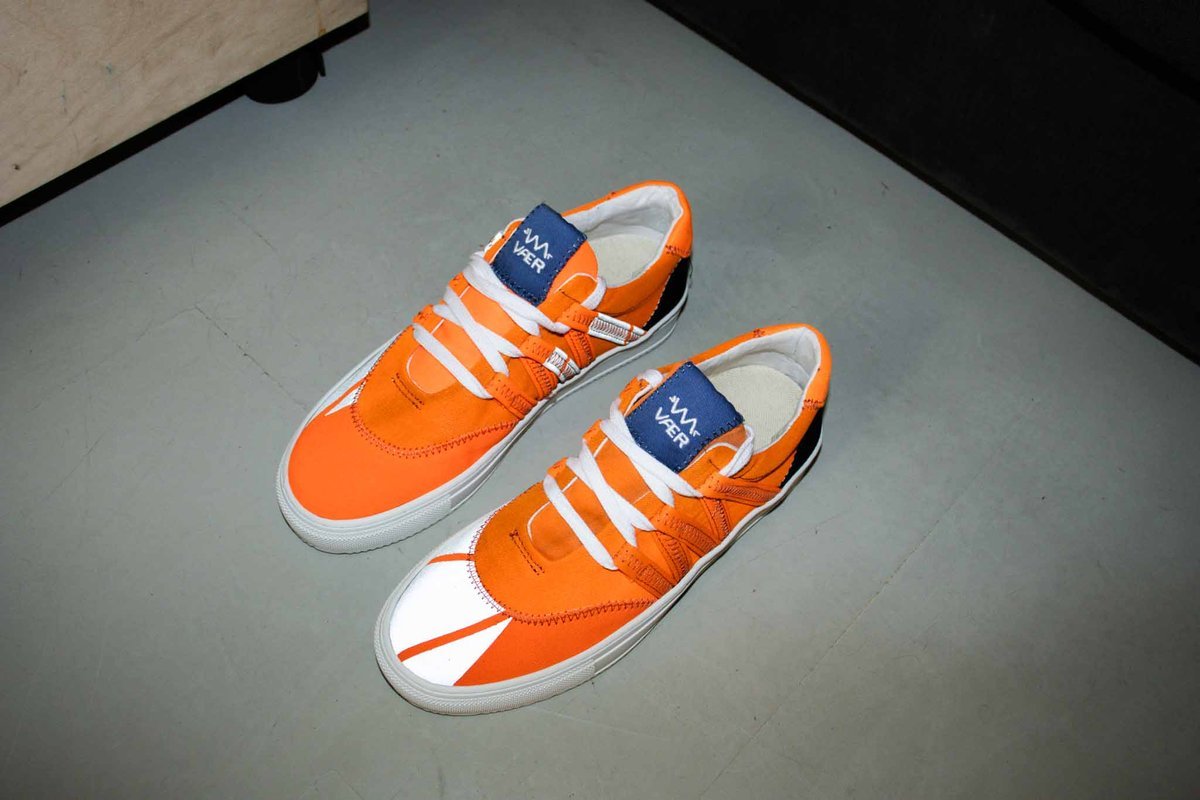
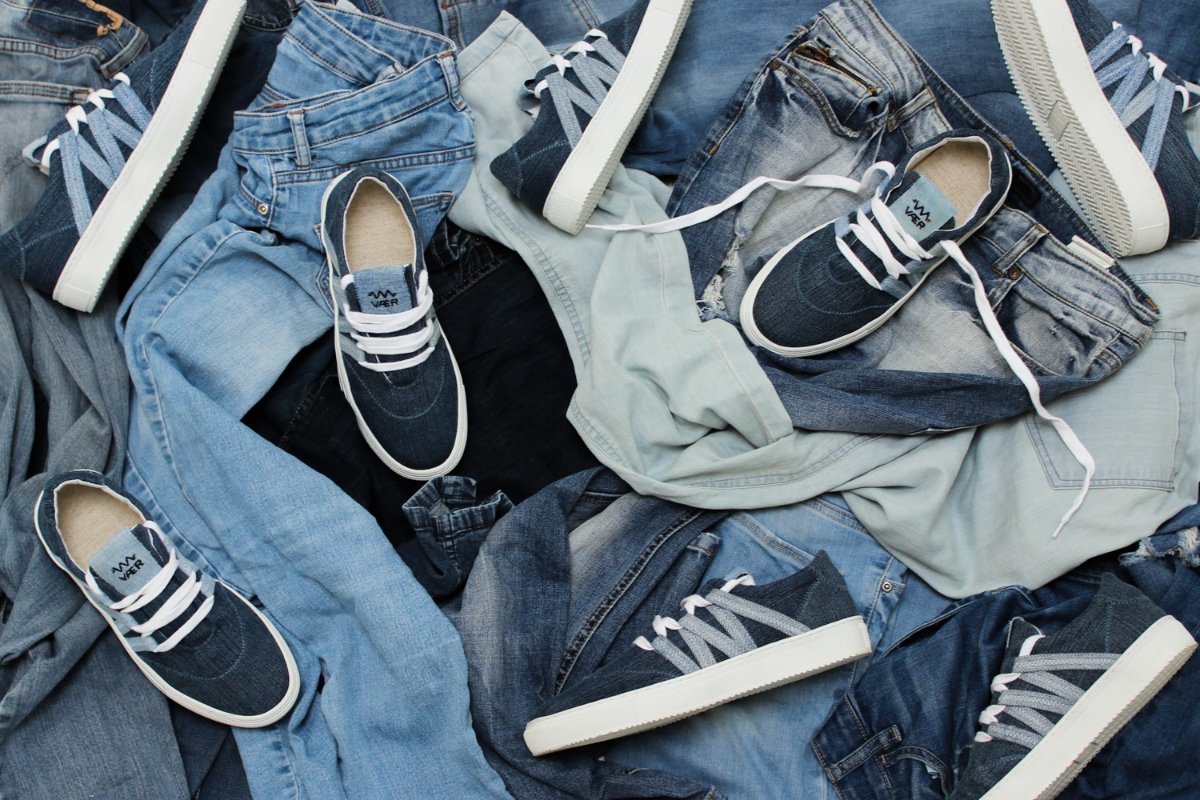
A pair of jeans. VAER in Copenhagen makes sneakers from textiles someone threw away: old jeans, worn restaurant tablecloths, discarded workwear. Denim becomes the blue of one model, white linen the lining of another. One run came out bright orange, cut from high-visibility STARK workwear made to be seen on a building site. Because the material arrives in batches, the shoes do too.
A museum flag. REFISHED again. The banners that hung outside the Belvedere and the Bank Austria Kunstforum in Vienna are sewn into bags in a railway arch in the same city. The exhibitions survive in the product names.
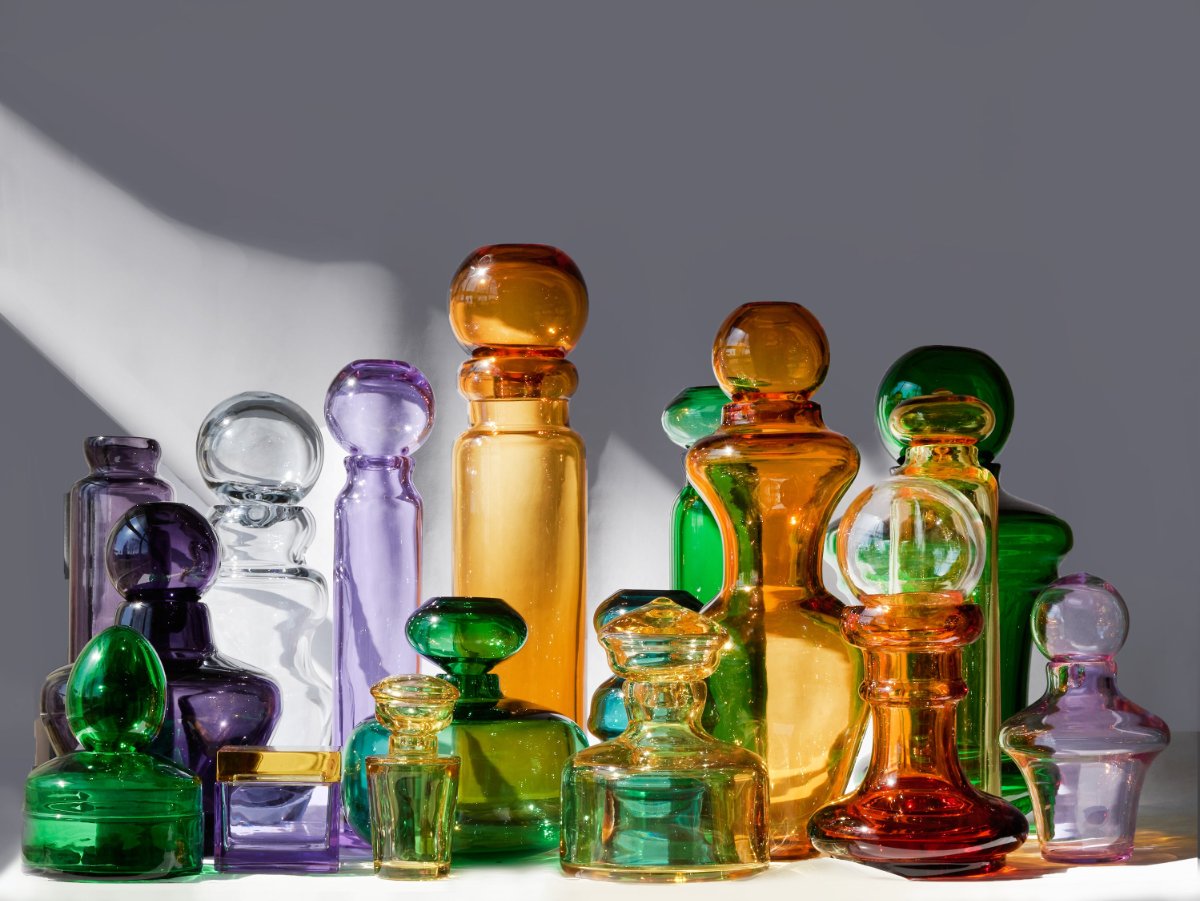
A crystal shard. At a glassworks in Empoli, in Tuscany, mouth-blowing leaves crystal behind in the crucible. It hardens there into splinters sharp enough to cut. Since 2023, Studio Bojola has smoothed those shards one at a time and set them like stones into rings and ear cuffs. Margherita Bojola's line on it: the most beautiful material in crystal production is the material nobody was using.

The hands behind it
Upcycled things pass through more hands than new ones. Somebody has to find the material, clean it, take it apart and work out what it could become. Nobody can order the next batch from a catalogue. When the base material changes, so does the final product. Every new batch means starting again.
Théla is a good example. Waste collectors gather the plastic, and Diti chooses which kinds and which colours to take before anything is sorted, cleaned and cut by hand into yarn. Weavers in Kutch work it on a loom set up for Théla alone, and she spends three to four months of each year there with them. The cloth is then tailored in Mumbai, partly at the C.C. Shroff Self Help Centre. Her one rule there is to cut as little as possible, so no small plastic offcuts are left behind.
At REFISHED, the hands are named. Every bag from the Phnom Penh workshop carries the name and signature of the person who sewed it, along with the place and the material. Put Sophea, Mom Sreyneth, Ol Heang, Khuon Sithat, Meas Than and Sok Nak are listed on the product pages. Sissi Vogler's mother, Isolde, trained in textiles, designed one of the bags. It carries her name too.
Charkha & Loom, based in Amsterdam, works with artisans across India. One jacket was cut from a forty-year-old Pattu shawl, woven by hand in Himachal. The small felt flowers and rag dolls come from SilaiWali in New Delhi, a social enterprise where Afghan women refugees turn fabric offcuts into objects.
What it costs
Here is the honest part. Upcycling is slow, and it costs more than it looks like it should.
The material is free or close to it. The work is not. Every sack has to be washed, every raft taken apart, every shard smoothed by hand. A factory buys a thousand metres of the same fabric and cuts it in one pass. An upcycler gets whatever arrived this month and works out the pattern piece by piece.
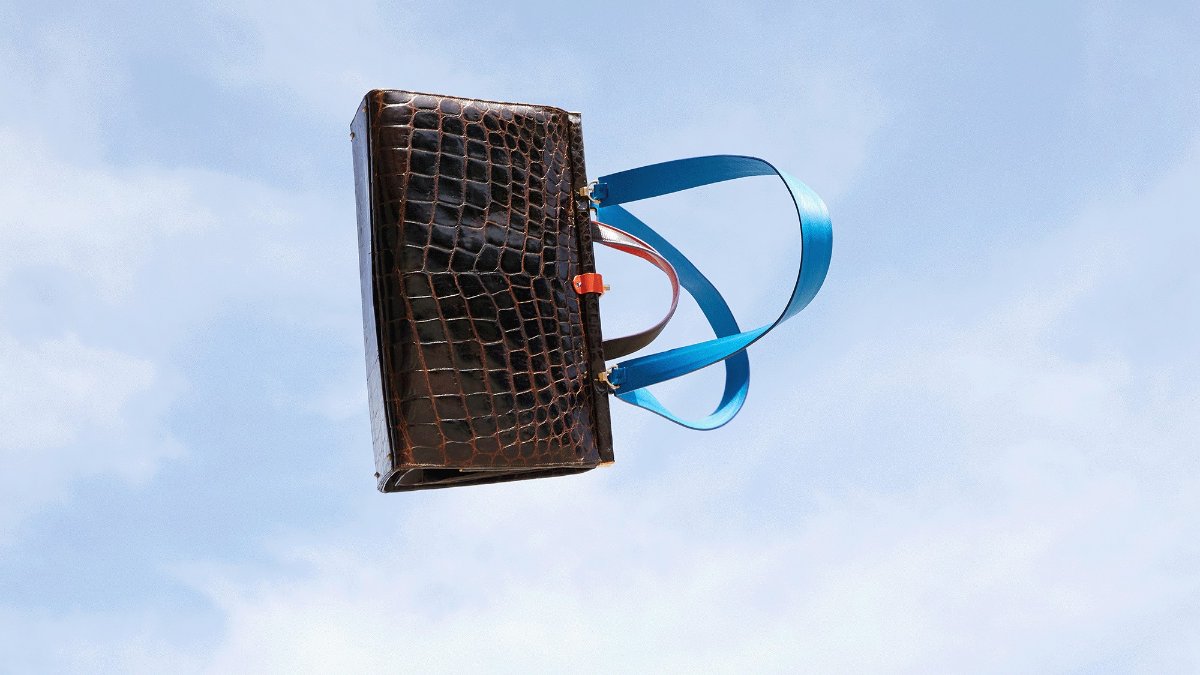
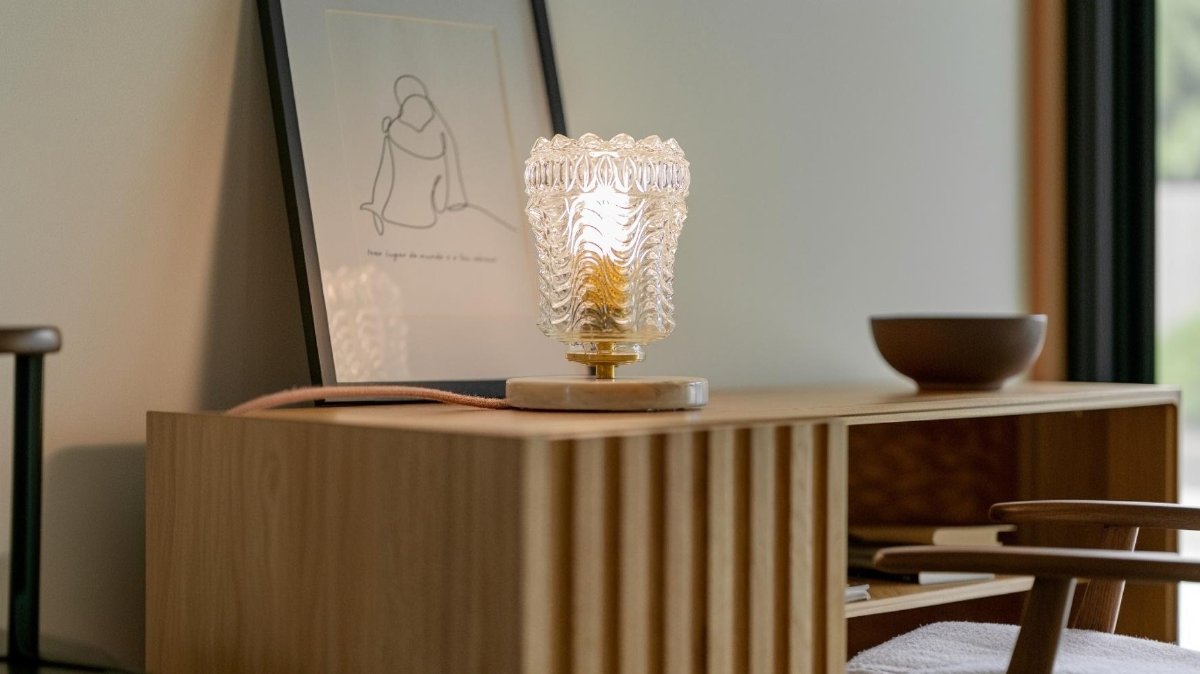
You also lose choice, and some makers turn that into the point. 3quarters keeps to three colours and has a sign in its shop window that reads "you don't need this bag". A VAER style exists only as long as that batch of jeans lasts. In Munich, ANJU STUDIO reworks second-hand bags, some in vintage crocodile and lizard, and numbers each one, because each exists exactly once. In Lisbon, ALFAMA CHIC builds lamps around flea-market opaline globes. When they cannot find another globe of the same shape, that lamp is simply gone.
To me that is the trade. You give up the endless, identical supply that most shopping takes for granted. In return you get a thing that could only have been made once, from something that was already here.
Mend it, keep it
What follows from that? Probably buy less, and keep longer what you do buy. That advice is older than ledge and it still holds.
Upcycled things make it easier, I think. When you know an object's past, you tend to want it to have a future. Several of the brands here build that in. VAER takes its own shoes back and grinds the old soles into new ones. The 3quarters workshop mends its bags for free, and strips the ones past saving for parts, the way it once stripped the rafts.
The raft spent years packed in a barrel on a ferry. If the bag gets mended when it tears, it may well outlast its first life.
You might wonder
Is upcycling better than recycling?
They solve different problems. Recycling handles large volumes but breaks material down, usually with some loss of quality. Upcycling keeps an object's form and character but only works in small numbers. A system needs both.
Is deadstock upcycling?
No. Deadstock is new material that was never used. Upcycling starts with something that has been used or thrown away. Both avoid new production, which is why they get mixed up.
How do I tell real upcycling from a marketing line?
Ask what exactly the material was before, and where it came from. A brand that upcycles can usually name the source down to the object: ferry rafts, cement sacks, museum flags. A vague "made from waste" is a reason to ask again. Photos: 3quarters (opening image and raft fabric), Théla, REFISHED, VAER, Studio Bojola.
Brands in this story
Read by people who care how things are made.
ledge Magazine lands once a month, free.
The archive opens as the editions grow.