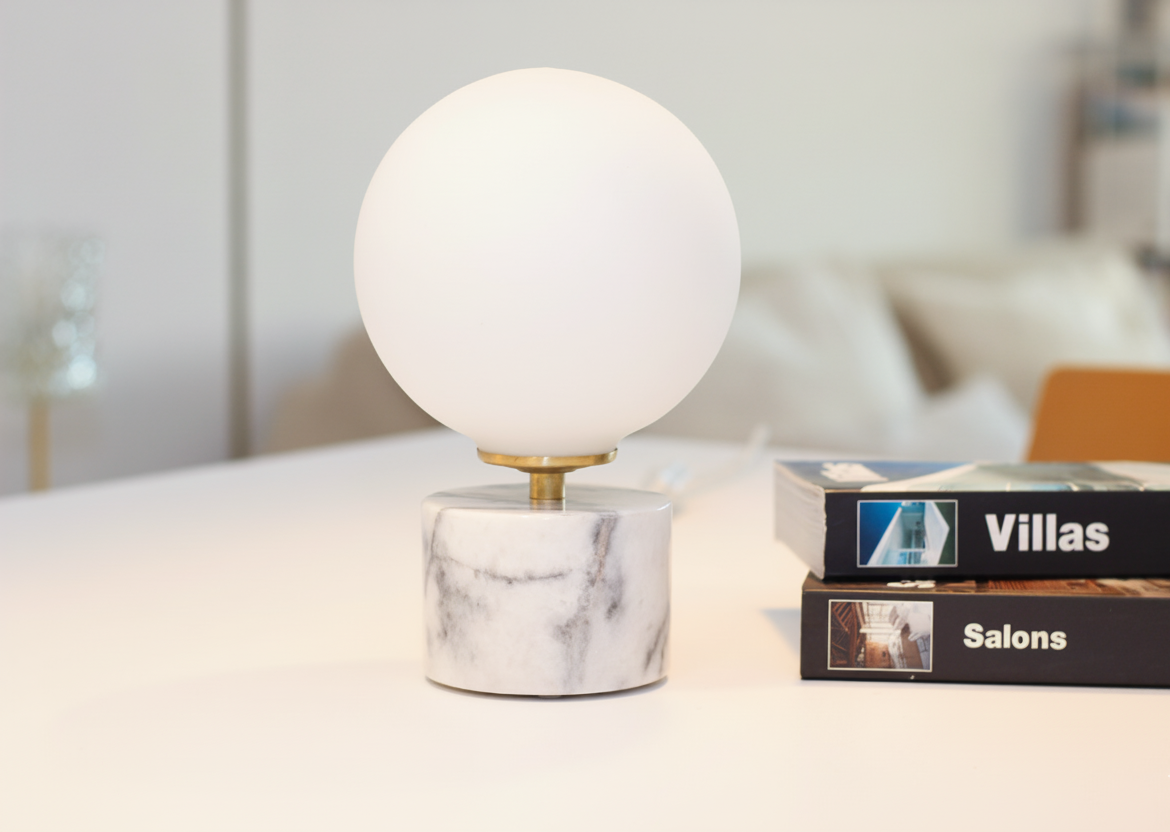
Old glass, kept alive.
In a two-person Lisbon studio called Alfama Chic, Catarina and Benjamin give discarded opaline glass a second life, pairing flea-market globes with bases cut from Portuguese marble. Every lamp is one of a kind.
There is a kind of glass that has to be hunted for. Not new glass, but the milky opaline globes that sat on a sideboard for thirty or forty years, then got boxed up and forgotten. Catarina and Benjamin go looking for it on Sunday mornings, at Lisbon's flea markets, and they bring it back to life.
Their studio is called Alfama Chic, after the old quarter where it started. It is two people, and every lamp that leaves it is one of a kind.
From Paris to a Lisbon flea market
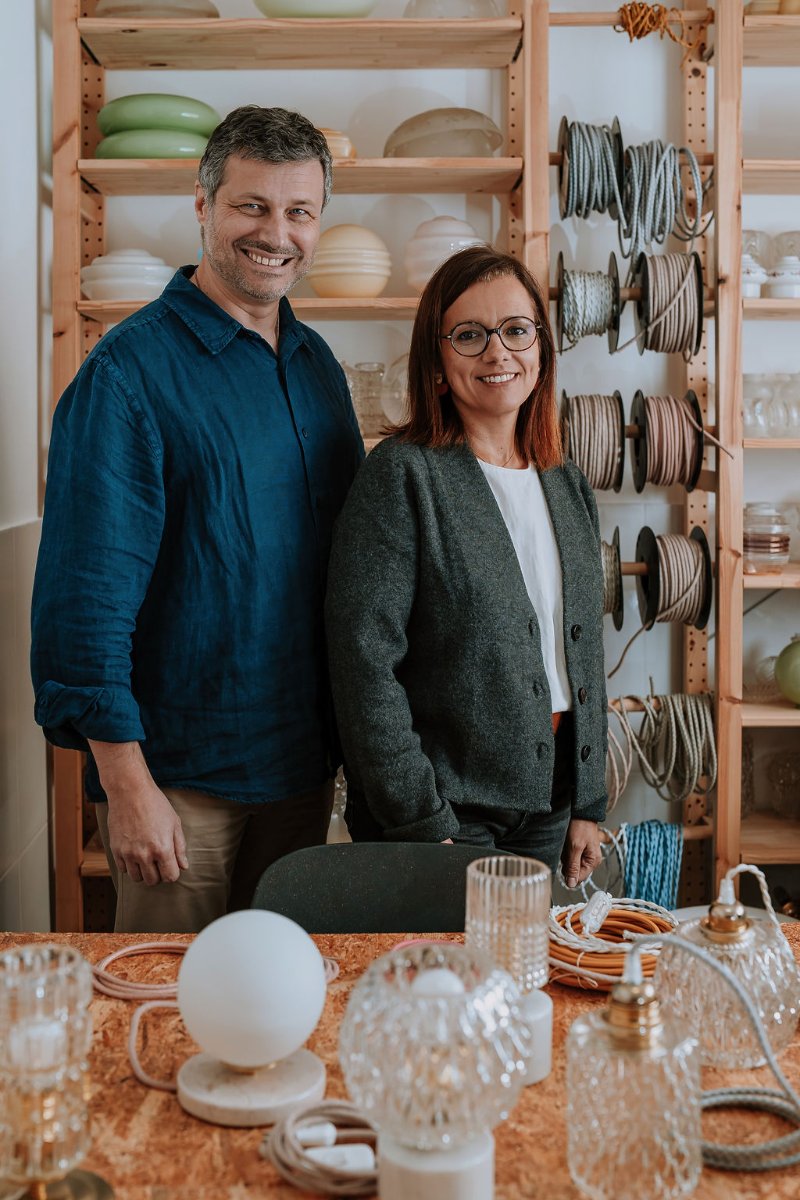
Benjamin is French, Catarina is Portuguese, and they met in Paris. For years design was something they loved rather than something they did. His family were designers and architects; his own last job, in his telling, was selling car parts. What they shared was a feeling for Scandinavian light and minimalist form, and a growing impatience with the lamps in the shops, mass-made, interchangeable, in Benjamin's words, with no soul.
In 2022 they settled in Lisbon. A walk through the Feira da Ladra, the flea market in the heart of the neighbourhood of Alfama, more or less settled it. Among the stalls were old glass shades with a character nobody makes any more. Catarina had already learned to restore pieces like these from friends in Portugal. Benjamin brought a designer's eye and, as it turned out, an engineer's hands. They started a studio.
Two kinds of lamp
Alfama Chic makes two things. The first are rescued objects: a single vintage opaline globe, cleaned, rewired to current safety standards, and set on a new base. Because the glass is found rather than made, most are one of one. When Benjamin cannot find another like it, that shape is simply gone.
The second is their own design, made in small series. The same soft opaline glass sits on a base cut from Portuguese stone: Estremoz marble, among the best in the country and a quiet rival to the Italian quarries, or a hard limestone from near Lisbon, the kind found on the city's old monuments. The wiring is new and CE-compliant, the textile cable Italian, offered in around ten colours so a lamp can be matched to a room. A buyer can change the base, the cable, the length, even the plug.
"We find a very nice old glass, and we try to keep it alive again."
Why Portugal
Benjamin models the bases in CAD and prints prototypes on a Bambu Lab 3D printer before anything is cut in stone. He came to it through a love of mechanical drawing rather than lighting. Portugal made the rest possible. In France, he found, building things was costly and hedged with rules. In and around Lisbon there were still people who could work stone and glass by hand, and marble worth the work. Two small marble firms cut the bases. Glass artisans keep alive techniques that would otherwise disappear.
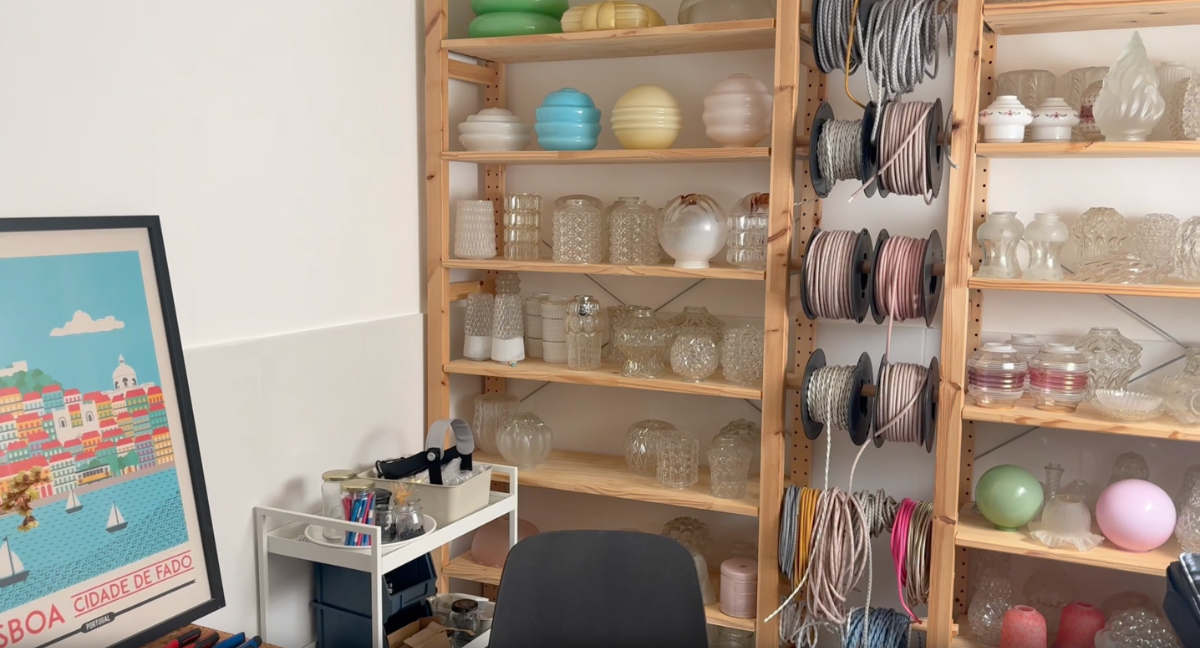
Where it is going
The Portuguese market is small, so most lamps travel: to interior designers and architects in Lisbon or other European cities. They increasingly travel to France, Germany and northern Europe, where the taste for this pared-back kind of light runs deeper. A collaboration is taking shape for next year with a Japanese designer, a former classmate from Benjamin's Portuguese night classes, on a small edition made in Portugal.
For now it stays two people, doing everything themselves, slowly. That is the cost of the thing, and much of the point of it.
Brands in this story

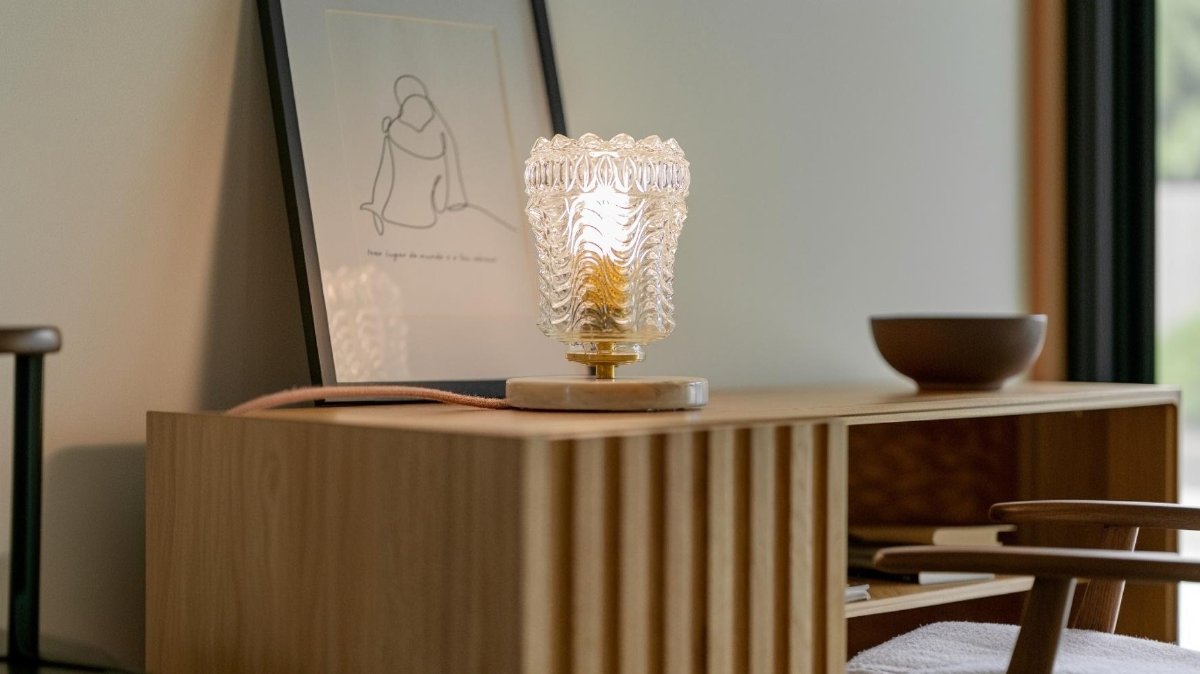 Alfama ChicVintage glass lamps from Portugal · MunichSee the brand →
Read by people who care how things are made.
ledge Magazine lands once a month, free.
The archive opens as the editions grow.